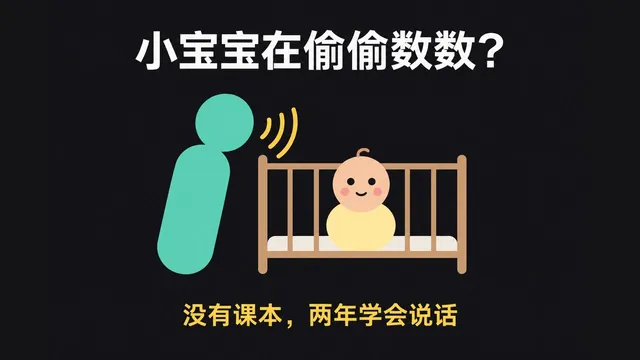
Can babies
really feel
despair?
Can't play sound? The illustrated version is right below.
Read the transcript
The full narration of the video.
Keep a blank face at your baby for two minutes. What happens? Psychologists actually tried it. First, a mom chats and smiles with her few-month-old, just like any day. The baby giggles and babbles back.
Then the mom suddenly goes still. Her face stays on the baby, but no smile, no words, no reply. The baby notices right away. He smiles, he points, as if to say: look at me! Nothing. So he gets louder, wriggles, and claps.
Still nothing. Within two minutes he starts to cry, leans back, and turns his face away. Some babies finally drop their eyes, stop looking at mom, and go limp, looking utterly hopeless. What did the baby just go through in those two minutes?
Picture the baby and the grown-up playing ping-pong. When the baby smiles, that's a serve. When you smile back, you've returned it, and the rally goes on. A blank face means nobody returns it. The baby serves again and again, nothing comes back, and finally he stops.
Scientists call it the same thing: serve and return. The baby looks, babbles, or hands you something, that's the serve; you look back, babble back, or take it, that's the return. Two minutes without a return does that. What if it happened every day? It has happened. Decades ago, in some orphanages, one caregiver looked after a whole room of babies, and crying often brought no one.
Visitors said the baby rooms were eerily quiet. The babies didn't cry; they just lay staring at the ceiling. They weren't being good. Crying brought no one, so they stopped serving. That is what despair looks like in a baby: not loud crying, but no crying at all.
Later these children talked late, grew slowly, and struggled to bond. The sooner they moved into a caring family, the more they caught up. You may be tensing up: yesterday I let my baby cry a few minutes before picking him up. Did I do harm? Don't worry. The experiment has one last part: mom smiles again.
Most babies soon smile again and go back to playing. There's more: even in close families, about seventy percent of the time, parent and baby are out of sync. What matters isn't catching every ball, it's picking it up after a miss and playing on.
From every return after a miss, the baby learns: when I serve, someone will answer. What leads to despair is no returns, day after day, for a long time, not one slow moment. If your baby seems flat and avoids looking at people for a long stretch, have a doctor take a look. So good parents aren't the ones who never miss, they're the ones who pick the ball back up.
When your baby is waiting for you to notice, what little thing does he do?
Two minutes of a blank face
Psychologists have an experiment called the Still Face Experiment. A mom plays with her baby as usual. Then she suddenly freezes. Her face still points at the baby, but she doesn't smile or talk.
A baby just a few months old notices right away. The baby smiles, points, squeals and claps to call mom back. In under two minutes the baby starts to cry and turns away. Some just drop their eyes and go limp.
The researchers wrote it down: a hopeless face.
Your baby is
playing ping-pong
Scientists call it the same thing: serve and return. A blank face means the ball goes over and nobody hits it back. The baby serves again and again. Nothing comes back. In the end the baby stops serving.
When a toddler falls and looks at you before crying, that's a serve too: Why do kids look at you before they cry?
The nursery that
was too quiet
That's two minutes with no return. What about every day?
Decades ago, in some orphanages, one caregiver looked after a whole room of babies. When a baby cried, often no one came. Visitors said the nurseries were eerily quiet. The babies didn't cry. They just lay there, staring at the ceiling.
They weren't being good. Nobody came, so they stopped serving. In a baby, despair isn't loud crying. It's no crying at all.
These children talked late, grew slowly and found it hard to get close to people. The earlier a child moved to a caring foster family, the more they caught up.
What if I let my
baby cry a few minutes?
Researchers also found that even close families are out of sync about 70% of the time. What matters isn't catching every ball. It's picking the ball back up after a miss and playing on. From each repair, babies learn: when I serve, someone will return it.
Not sure what to check when your baby cries? Baby crying? What to check first. Scared but not crying? Why adults often miss it when a baby is scared
still miss.
They just pick
the ball back up.
what little things do they do?
Quick check
In orphanages where crying babies often got no response, why were the nurseries so quiet?
Like ping-pong: they served again and again and nothing came back, so they stopped serving. No crying wasn't calm. It was giving up.