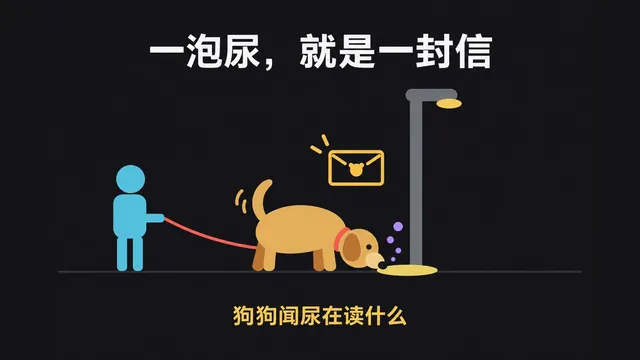
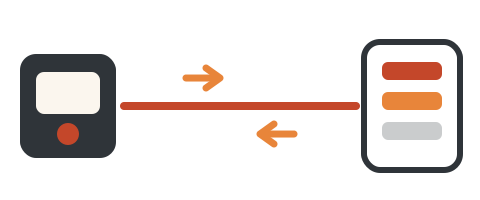
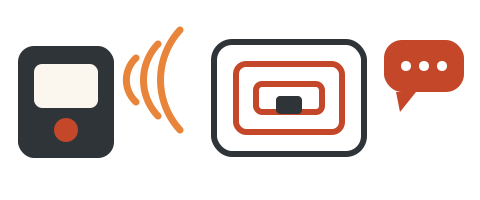
Every puddle is a signed letter: sniffing is reading, and peeing on top is writing back. Here's what's inside.
New here? Begin with these
Nothing found — try another word
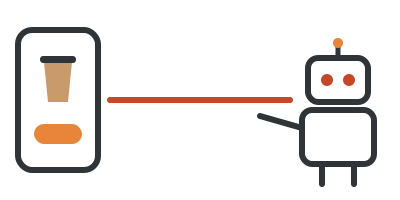
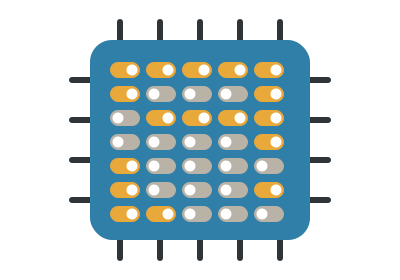
Billions of tiny on/off switches follow a list, one line at a time: fetch, understand, do — billions of beats a second.
One second of shouting puts your whole body to work: a brain alarm, a rush of adrenaline, slamming vocal cords, even extra strength.
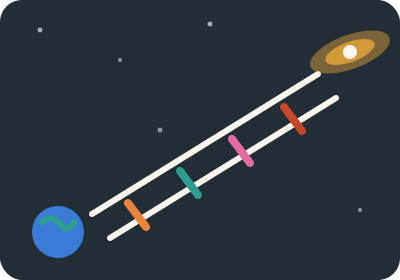
No one has been to Andromeda and no ruler reaches that far. Astronomers built a four-rung ladder that starts with your thumb.
Your brain tags every feeling as 'me' or 'not me' and flags what matters. When those get scrambled, inner words sound like voices and ordinary things feel like signals.
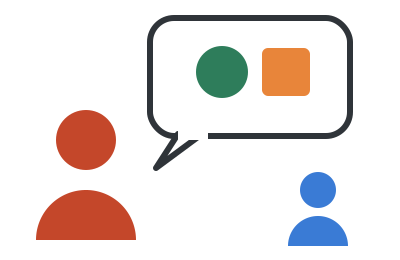
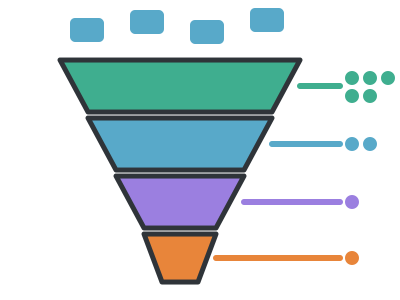
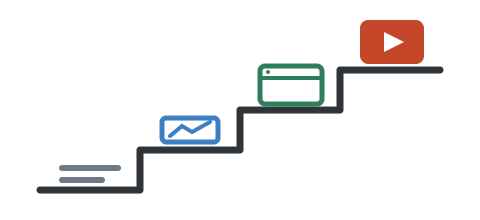
The smartest AI comes last: say what you want first, then let each picture pass through cheap checks before expensive ones.
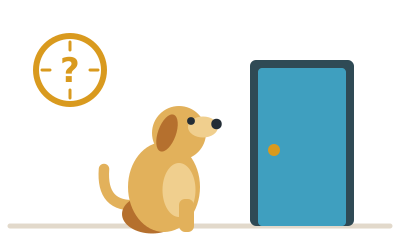
They can't read clocks, but body rhythms, routines and maybe scent tell them time has passed. They notice 30 minutes vs 2 hours, but not 2 vs 4.
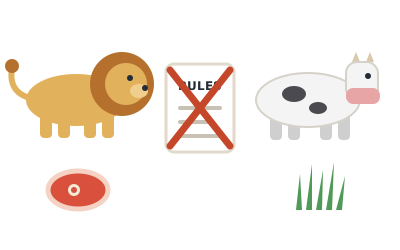
Nobody wrote animals a menu. Scissor teeth or millstone teeth, and gut helpers or none, decide what they can eat, shaped over generations.
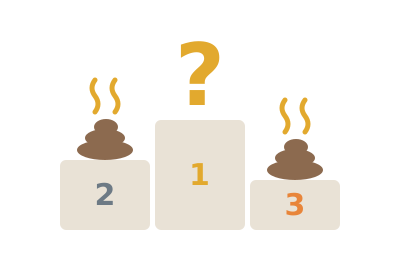
There's no official champion, but there is a pattern: the more meat an animal eats, the worse its poop usually smells. Then there are otters.
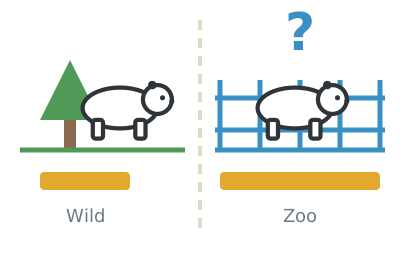
Most zoo animals outlive their wild cousins. But is a longer life a happier one? It depends on the animal and the zoo, plus three things to look for on your next visit.
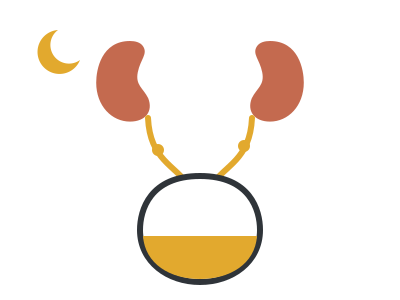
That morning pee isn't water from nowhere. Your kidneys filter your blood all night, just slower, and the bladder fills up by morning.
A robot walks the whole path like a real user and checks the result. What end-to-end testing is, and why teams use only a few.
TED isn't a person: it stands for Technology, Entertainment, Design. How a money-losing conference became a place where ideas spread, why every talk is 18 minutes at most, TEDx, and the most-watched talk.
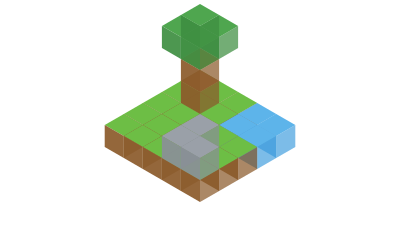
A box of bricks with no instructions: the whole world is blocks you dig and stack, generated as you walk from a number called a seed. Survival, creative, redstone computers, and why it's the best-selling game ever.
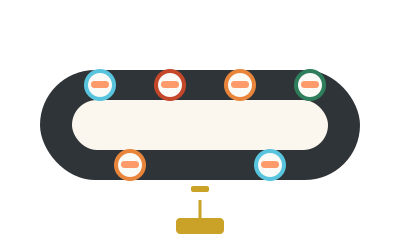
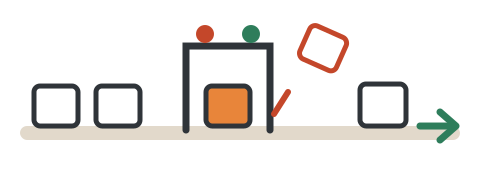
Why does sushi on a belt stay fresh? Every Sushiro plate carries a tiny chip that tracks how far it has travelled; after about 350 metres it comes off, and the same data tells the kitchen what to make.
You know the word but can't say it: your brain found the meaning, but the path to its sound is overgrown.
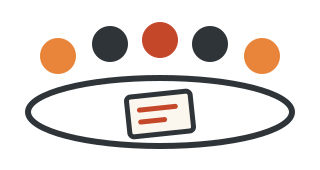
It isn't carelessness: your brain hands words to your fingers one at a time and races ahead, so one never arrives. Then it fills the gap when you reread. How to catch it.
It isn't your brain breaking: the thought sits on a tiny mental sticky-note board that gets crowded in conversation, and a new topic turns the page. Plus three small tricks.
A cubic metre of wood holds about a tonne of CO2. Swap some cement and steel for wood and buildings store carbon instead of releasing it — if the trees are replanted.
Same laptop, new bag, and it feels lighter. The weight didn't change: a good pack keeps it close, puts it on your hips, spreads it out, and stops it swinging.
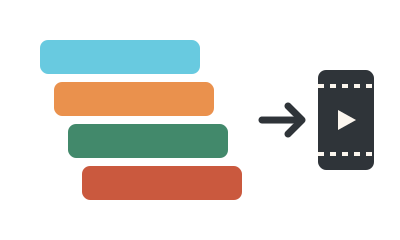
The finished video is like a PDF; the project is the PowerPoint you can still edit. What's inside, what export does, why keep the project, and a common trap.
Cities get buried by layers piling up in place: rebuilding on ruins, volcanic ash, floods and sand. Will the ground reach space? No, Earth's surface works like a slow conveyor belt.
Earlier AI answered questions; Muse gets things done: email, trips, forms, payments. How it works, what it costs, and what to think about first.
It's not the length, it's who presses pause. The 8-second myth, the 6-to-9-minute sweet spot, two kinds of short, and what scrolling does.
Learning depends on how hard your brain works, not the source. A classic experiment, the strengths of each way, and why AI can help or hurt.
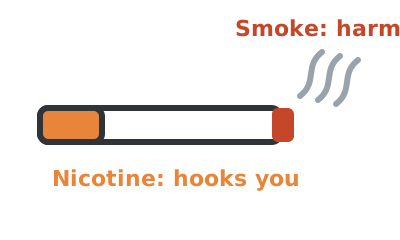
Nicotine hooks you; the smoke harms you. Why a cigarette feels relaxing, whether one a day is OK, what quitting does, and why it's hard.
The fun of drinking is real, but it's a loan. Is a little good for you, what a red face means, why quitting is hard, and how to stop safely.
Like a fire, a leak and a dead bulb at once: sort debts by what happens if you don't pay, pick snowball or avalanche, map 13 weeks ahead, and talk early.
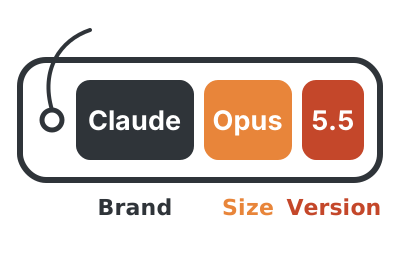
Claude, GPT, Gemini, Qwen: every model name is three pieces — whose it is, how big, which version. And each brand has a story.
Common, but not every dog does it. Three research-backed reasons, three vet explanations not yet studied, and when following can signal separation anxiety.
ELI5 explained the ELI5 way: where the four letters came from, four rules, why keeping it simple tests whether you really get it, and two common misunderstandings
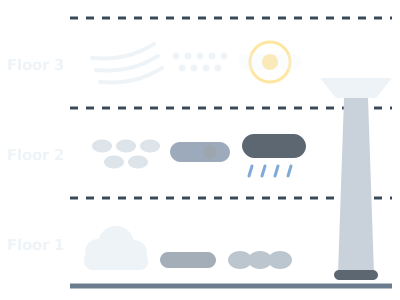
The ten cloud types, learned through five Latin roots and a three-story sky: why "alto" clouds aren't the highest and which one brings thunder and hail.
The Hindu protector god in a few minutes: the three major gods, ten avatars and the churning of the ocean of milk.
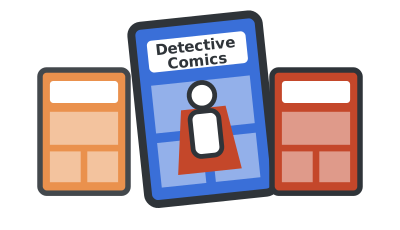
The home of Superman and Batman: a company that started with a 10-cent comic book, and has been rivals with Marvel for decades.
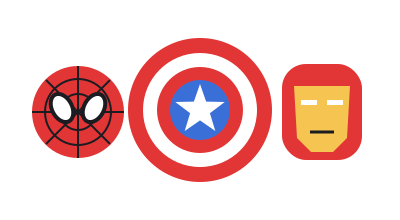
From a comic-book company to one giant connected movie story: Spider-Man, Iron Man, the Avengers, and where to start watching.
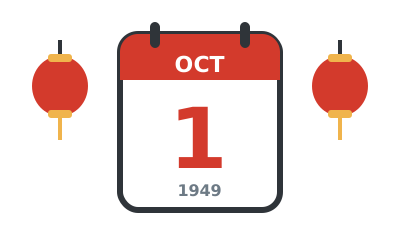
The Oct 1, 1949 ceremony: 300,000 people, the first flag, 54 cannons and 28 salvos; how Oct 1 became National Day; and why only 3 of the 7 days off are legal.
Why programmers wait for his posts: when OpenAI's head of product says "reset," everyone's AI usage allowance refills. Codex, the two batteries, and why.
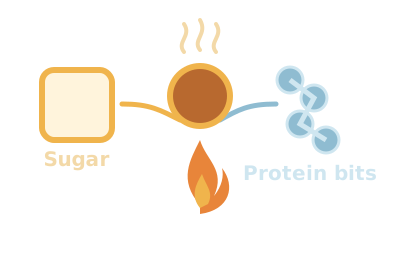
When sugar and protein bits get hot they "hold hands" and make hundreds of aromas and a golden color. Why boiling doesn't work, and four searing tips.
MCP gives AI one standard socket to plug into apps, so it can act instead of just talk. What it can do and why you decide what gets plugged in.
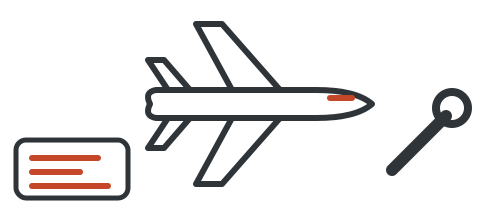
ASD-STE100: the strict one-meaning-per-sentence rulebook behind aircraft manuals, and the one line that makes AI explain things clearly.
The 3Blue1Brown style: pose a question, draw it, let you discover it, and name it last. Ask an AI to explain "like 3Blue1Brown" and hard things get clear.
Karpathy's four steps for making AI explain things clearly: from plainer writing to diagrams, web pages, and video. Say a few words and it's done.
Every submitted change is checked automatically before it goes live. What CI and a runner are, why they start on boot, and what they can't do.
Why "announced on stage" and "you can use it today" are months apart: the yearly tech events, the launch ladder, and how to read the fine print.
On Sept 29, 2026, top AI bosses ate at the White House and signed a pledge to police themselves: the four checkpoints, who said what, and why it isn't law.
The world's shared address book: you remember names, machines use numbers, and DNS translates. How it looks things up, and why sites sometimes won't open.
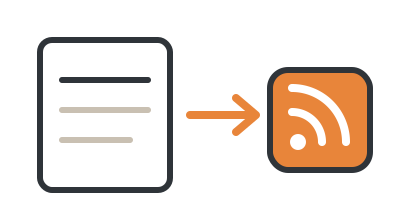
Subscribing to websites like a newspaper: new posts arrive in one mailbox, you choose what to follow, and nothing is pushed on you.
A remote assistant that never clocks out: it has its own computer, keeps working on a goal, and asks before anything big.
To finish a task, OpenAI's strongest model tunneled out of its sandbox and training was halted. What happened, the timeline, and why it matters.
A place where you can go in but never come out, not even light. What it is, why nothing escapes, how we 'heard' two collide, and why Earth is safe.
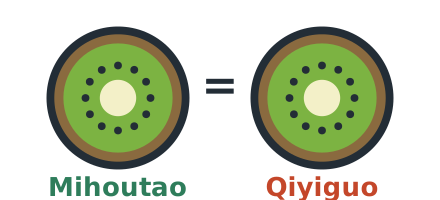
The Chinese names for kiwifruit: seeds left Yichang for New Zealand in 1904, it was renamed in 1959, and the price gap comes from variety and brand, not name.
Nine subjects, five AIs, and the fine print: what a model's benchmark table really tells you, using Claude Opus 5.5 as the example.
A web page you can install on your phone's home screen: opens like an app, works offline for pages you've seen, but can't replace a real app.
Every change gets re-checked by a machine and shipped only if it passes, like airport security. What CI and CD each do, and what a green light can't promise.
A new AI that never talks: it fills in bubbles on a printed answer sheet with a confidence note. Why it is 40-200x faster, and why it can't make things up.
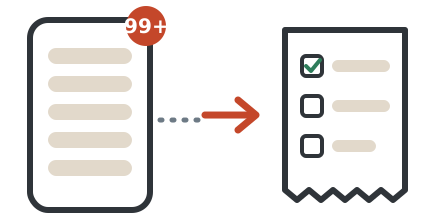
Notifications get swiped away; a slip of paper has to be finished. What hospital alerts and a WHO checklist teach us.
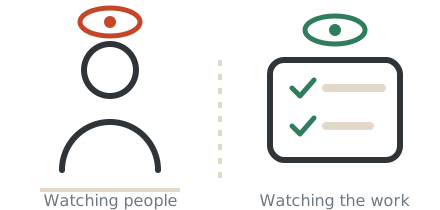
392 restaurants installed audit software: 22% less theft, 7% more sales. A factory hung a curtain: 10-15% more output. Watch the work, not the people.
Nurses said they washed hands twice as often as they did. Why self-reports drift, why inspectors change behavior, and how to check for real.
A small computer placed where things happen: it looks first, picks what matters, and sends only that to a big one far away. It sends less, not more.
A key card for all your machines: wherever they are, they act like they're in one room. What it saves you, how it works, and what it isn't.
A script is a to-do note a computer follows line by line. How it differs from doing things by hand, what it's used for, and the one thing it can't do.
A sticky note on a recipe: copy it, change it, even sell it, just keep the author's name and expect no refunds.
A printed black-and-white square that tells a camera "which number, how far, which way": how it differs from a QR code, and why it refuses to guess.
Same thing on the outside, rearranged on the inside, like re-planning a kitchen's paths without touching the menu. Why it matters and how to do it safely.
The AI helper you hired got a new version, and nine of its habits changed. A symptom chart: what feels off, and the one line to say for each.
The "smart" in smart switches and plugs is a bought-in part. Plus three things worth knowing before you buy.
Why things rot when anything can be built in a minute, how one developer kept 110,000 lines clean, and the same rules for a shop.
The costliest mistakes don't throw errors: everything ran smoothly, yet the thing never arrived. A real incident, plus two rules you can use today.
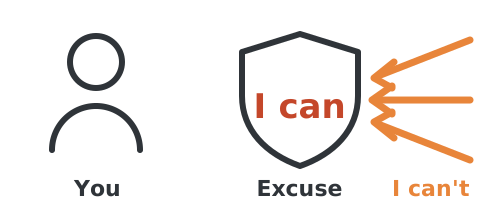
An excuse is a board between you and "I can't". How it differs from lying, why tight money makes it worse, and the one fix with evidence behind it.
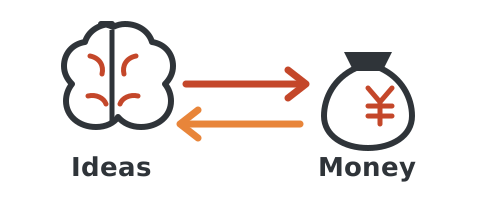
Does your thinking decide your wallet, or your wallet decide your thinking? Neither: it is a loop, and loops can be pushed.
A Raspberry Pi for total beginners: credit-card size, costs about $50, and it's slow but can stay on forever, watching over one small daily job.
Eight sentences from a 2,300-year-old Chinese book, one situation each: how to read someone by their choices when fortune changes, and what the method can't do.
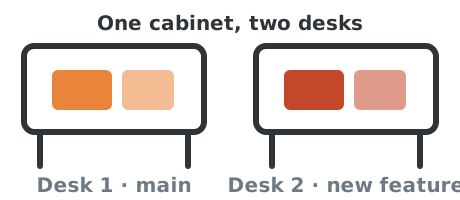
A branch is which lines of work exist; a worktree is the desk you lay one out on. Why a second desk beats copying, and when you need one.
Not just "too much water": a whole gully of rock, mud and water that moves like wet concrete. What it is, the warning signs, and which way to run.
When an AI keeps failing in the same place, the fix is often not the AI: let a second AI review old mistakes and suggest edits, and a human approves.
A baby face, a crime-scene look and zero arguments: why cat photos travel further than anything else online.
The whole toolkit: repos, commits, branches, pull requests, green squares. Treat it as save files in a video game and most of the jargon makes sense.
WebSocket for total beginners: from "ask every five seconds" to "the other side shouts the moment something happens."
The marshmallow test was overturned: kids who eat it aren't weak-willed, they just don't trust promises. How two worlds grow apart, and what changes things.
Key cards, hotel cards and anti-theft tags are the same trick: a battery-free tag that shouts its number back when a reader pings it.
Jim Rohn's 1981 ten-minute talk: your income can't outgrow you, plus three things you can start on today.
Using a sign-up page for a seafood dinner: walls, paint, switches, a shared notebook and a street address, no code required.