31 pieces in this series — best read in order.
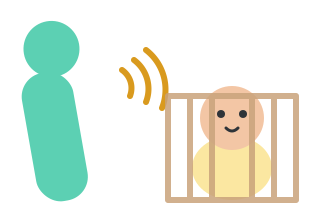
Babies don't memorize words. They listen, quietly count which sounds stick together, keep the sounds that matter, and learn from real people.
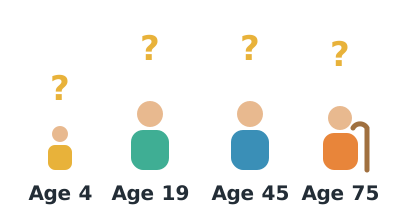
Four-year-olds ask the most questions, nineteen-year-olds chase the most thrills, and older adults most want the answer to a question.
Most homes just bicker: the brain's gas pedal arrives before its brakes, friends raise the thrill, the body clock shifts, and teens want the wheel.
Babies arrive with a base coat of temperament, even before birth. But a base coat isn't destiny.
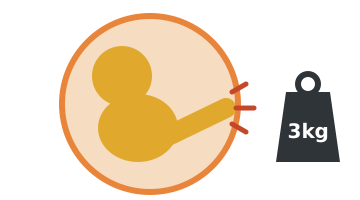
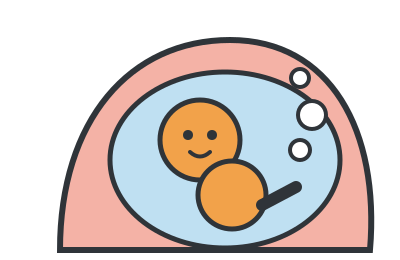
Not saying hello, not fussing: every kick builds bones and joints and helps the brain draw a map of the body.
A study of 8,400 children found early talkers score only about four points higher on average. Most late talkers catch up; understanding and pointing matter more.
The baby's side sends a 'sick letter' to a mailbox at the bottom of mom's brain. Most animal babies barely send it.
Kids do get tired. They play in short bursts, recover faster than endurance athletes, and sleep far more than adults.
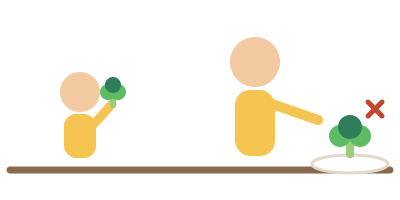
Not spoiling: slower growth, a tongue more sensitive to bitter, and an inner bodyguard wary of new foods. It often takes 8 to 15 tries.
Over half of kids in China are nearsighted. Books are only half the story: close-up work is the gas pedal, and outdoor daylight is the brake.
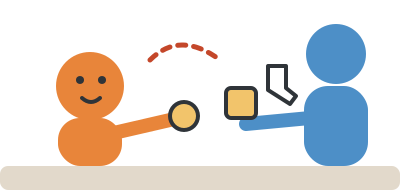
In 1976 a psychologist found toddlers hand things to everyone. What your baby pushes into your hand is his first way of talking.
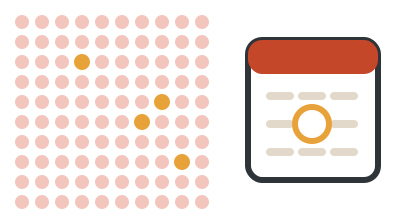
Only about 4% of babies arrive on their due date. A placental clock, signals from the baby and a womb that stops obeying the brake all have to line up.
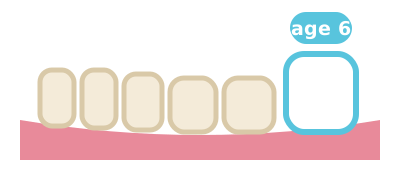
Teeth can't grow once they're in, so a tiny jaw gets a small set first. Baby teeth save the seat, and the molar that shows up at six is forever.
A baby's kneecap is still cartilage at birth. More cartilage, looser ligaments and short legs add up to a bendy baby, and legs that won't straighten at first are normal.
Pregnancy hormones twist the immune guard's alarm knobs, some down, some up, then birth twists them back. Babies inherit a jumpy guard, not Mom's allergy.
They fall, look at you, then cry. Kids really do feel more pain — and your reaction can turn it up or down.
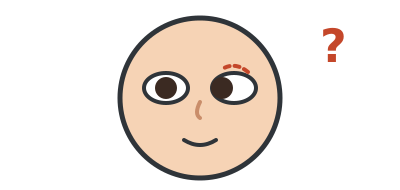
One eye on you, one drifting to the nose? Usually not a squint: newborn eyes are still learning to team up, and a flat nose bridge fools you. Plus when to see a doctor.
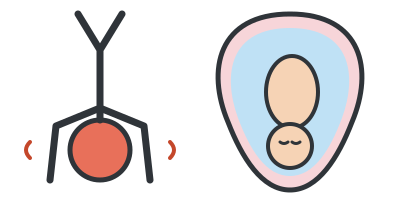
Stand on your head and your face goes red. A baby stays head-down for weeks and is fine. The secret is the water all around it.
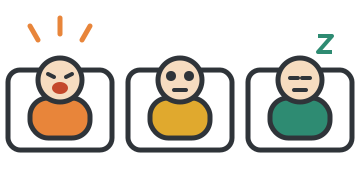
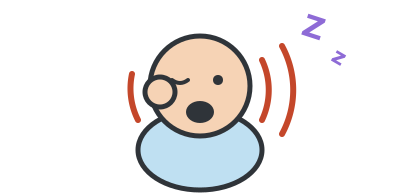
They're not 'not tired' — they're overtired. A baby's body clock isn't set, their sleep bucket is tiny, and sleep means you disappear. Here's what helps.
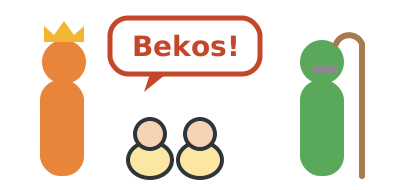
A king's legend, two isolated girls, and deaf kids who invented a sign language: talking isn't taught, it grows out of conversation.
Sixty Scottish babies, an African forest and Romanian orphanages show it isn't one person or a crowd — it's a few steady people who answer every cry.
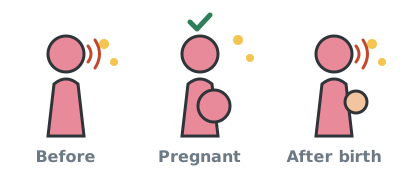
Low sounds by week 19, Mom's voice by heart at birth: what a baby actually hears in the womb, and why Mom's voice comes through clearest.
Their lungs are full of fluid they make themselves. Oxygen comes from mom's every breath, through the placenta and umbilical cord.
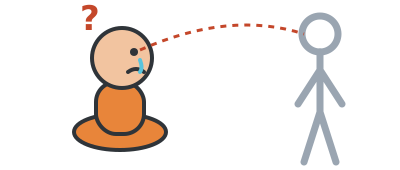
Kids feel the pain, but can't tell how serious it is, so they check your face. A plane jolt, the visual-cliff experiment, and a play-centre study explain why.
One apple lasts a toddler two days. Fruit is one compartment of the lunchbox: enough for their age, a mix of kinds, whole fruit, cut into safe shapes.
The first movement is usually not a kick but a bubble. From bubble to fish to kitten under a blanket, what changes is the baby's strength.
Not hunger, and not just teething: with clumsy hands and blurry eyes, babies explore the world with their mouth. Plus a toilet-paper tube safety check.
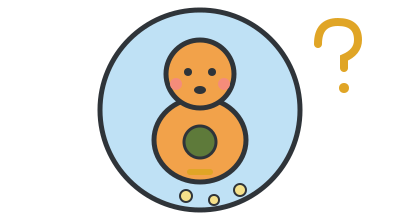
Babies pee in the womb but almost never poop: the bits pile up as green meconium until birth, while the real waste goes to mom through the cord.
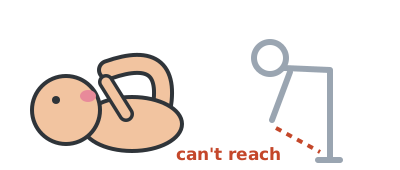
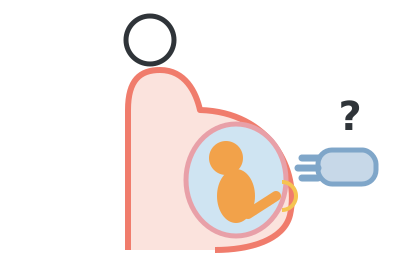
She says feel this, you feel nothing. It's not your hand: his kicks aren't yet strong enough to get through the layers between you.
Fear of childbirth is common. Split it into four pieces: pain, things going wrong, not knowing, being alone. Labor pain comes in waves, and an epidural works like a seawall.
China's student record works like a loyalty card that follows your child: classes go on without it, but transfers, exam sign-up and diplomas need it. Here's how to fix a missing one.