Do babies raised by grandparents really talk later?
Can't play sound? The illustrated version is right below.
Read the transcript
The full narration of the video.
Do babies raised by grandparents really talk later? The baby points at the cup and grunts. Grandma hands it over right away. And with that, the baby skips one chance to speak.
First, both sides. Several hospitals in China looked at late-talking toddlers, and found more of them were raised by grandparents. But a large study abroad that followed thousands of children found the opposite: three-year-olds looked after by grandma knew more words than kids in daycare. Same grandparents, opposite results.
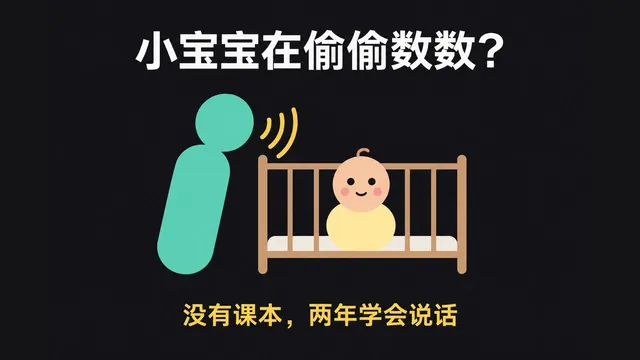
So what matters isn't who's caring, it's how they talk with the child. Talking with a baby is a bit like using a walkie-talkie. Hold the button and keep talking, and the other side can't get a word in. Let go and wait, and they can answer you.
At first the baby's reply isn't a word: it's an 'ah', a point, a look. You catch it and answer back. That's one round. This back-and-forth has a proper name: conversational turns.
One study clipped a small recorder onto children for two whole days, then counted every exchange. How many words the adults said mattered less. The more back-and-forths, the better the child's language, and the brain's speech area was more active while listening to a story. Those were four- to six-year-olds; for babies, it isn't settled yet.
Back to grandma and the cup. Handing it over at the first point is like finishing the baby's sentence the moment he presses the button. A TV left on is the same: it talks and talks, and never waits for the baby to answer.
Parents do both of these too. It's not just grandparents. The fix is simple: when the baby points, don't rush. Crouch down and ask: the cup? Wait two or three seconds. Even if he only says 'wa', then hand it over.
Don't panic about early or late, either. About one in eight two-year-olds is a late talker, more often boys, and most of them catch up. But keep two lines in mind: not calling mama or dada on purpose by eighteen months, or not naming three things by two, means a visit to the child-health clinic, and a hearing check. Talking late isn't grandma's fault. The real problem is talk that only flows one way.
What was your child's first word, and who was it for?
One point, and the cup arrives
The baby points at the cup and grunts. Grandma hands it over right away. And with that, the baby skips one chance to speak.
Two findings that don't match
Same grandparents, opposite results. What matters isn't who's caring — it's how they talk with the child.
Talking with a baby is like a walkie-talkie
Hold the button and keep talking, and the other side can't get a word in. Let go and wait, and they can answer you.
At first the baby's reply isn't a word: it's an “ah”, a point, a look. You catch it and answer back. That's one round.
This back-and-forth has a proper name: “conversational turns”. You say something, the baby responds, you reply again. Holding the button is you talking, letting go is waiting, and the reply from the other end is the baby's “ah”.
With a walkie-talkie both ends can talk. A baby can only say “ah” or point at first — that still counts.
Rounds matter more than words
One study clipped a small recorder onto children for two whole days, then counted every exchange. How many words adults said mattered less. The more back-and-forths, the better the child's language — and the brain's speech area was more active when listening to a story.
Those were four- to six-year-olds; for babies, it isn't settled yet. More on how babies learn to talk: talking back and forth.
A different way to hand over the cup
A TV left on is the same: the screen talks and talks, and never waits for the baby to answer. Parents do both of these too — it's not just grandparents.
Early or late: two lines to remember
About one in eight two-year-olds is a late talker, more often boys, and most of them catch up (talking early and smarts).
These studies only show two things appearing together; they can't say who caused what.
Quick check
What matters most when a baby is learning to talk?
Like a walkie-talkie: hold the button and talk nonstop, and the other side can't reply; let go and wait, and the baby can answer.