Books, videos,
or AI?
For anyone who wants to learn something
Can't play sound? The illustrated version is right below.
Read the transcript
The full narration of the video.
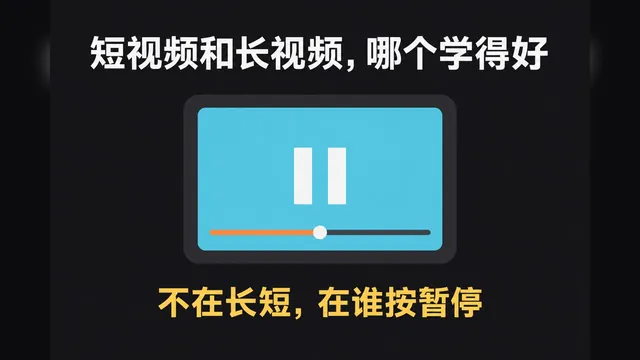
Books, short videos, or AI: which one actually helps you learn? Here's the short answer: it's not where you learned it from, it's how hard your brain worked. A classic experiment. Two groups of students learned the same science passage.
Group A read it four times. Group B read it once, then closed it and wrote down what they remembered. Tested five minutes later, Group A remembered more. But a week later, Group A kept only forty percent, while Group B kept sixty.
The smoother it feels, the more you think you've got it. What sticks is what you had to work to recall. Short videos are quick and easy, great for learning that something exists. But they're so smooth, they easily make you feel you understand. Books are slower, but you set the pace: you can stop and flip back when you're lost.
AI lets you ask follow-ups and explains at your level. But it can also just do the work for you. In a Harvard physics course, an AI tutor that guided students step by step helped them learn more than twice as much as class. But at one high school, students who just asked AI for answers did worse than students who never used it, once the AI was taken away.
So use short videos as the menu, books as the meal, and AI as your sparring partner. Then close everything and explain it yourself. If you can say it, you've learned it. Next time something catches your eye, go read about it. Then let AI quiz you.
In one sentence
Whether you learn it
doesn't depend on where it came from.
It depends on how hard your brain worked.
Feeling you know it
isn't knowing it
A classic experiment: two groups of college students learned the same science passage.
After a week: only 40%.
After a week: still 61%.
Put simply: the smoother it feels, the more you think you know it. What actually sticks is what you worked to recall.
Three ways,
each good at something
For informational texts, an analysis of 54 studies and more than 170,000 people found reading on paper led to slightly better understanding than reading on screens. For stories, there was no difference.
Same AI,
opposite results
One small study (54 people, not yet peer-reviewed) also found that people who wrote essays with AI had a harder time recalling what they'd written.
How to combine them
how hard your brain works
Then let AI quiz you.