
Can't play sound? The illustrated version is right below.
The full narration of the video.
In one second, light can circle the Earth seven and a half times. Yet the universe puts a cap on speed. Nothing can go faster than light. Why? First, a small misunderstanding. This top speed doesn't really belong to light. It's the fastest any news can travel in the universe. When something happens, it's how soon, at the earliest, anywhere else can find out.
Light weighs nothing at all, so it runs at that limit from the moment it's born. That's why we call it the speed of light. So why can't we catch up? There's a simple way to picture it. Imagine everything is riding in a car. Its speed is fixed and the same for everyone; you can only steer.
Driving north means moving forward in time. Driving east means moving through space. Sit still, and your car heads due north. Time passes as normal. Start moving, and the car turns a little east. A little less goes north, so your time runs a little slower.
This isn't just make-believe. High in the sky, a very short-lived tiny particle is born. By its lifespan, it should never reach the ground. Yet we detect plenty of them on the ground every day. They move so fast that their own time slows down, so they arrive alive. Keep turning east, and your eastward speed keeps growing. But at most, it can only equal the car's own speed.
Pointing straight east: that's light. Light spends all of its speed on space, with none left for time. So nothing can outrun light. It's not that we haven't tried hard enough; the car simply has no faster gear. People have really tried. In Europe, there's a ring 27 kilometers around, built to push tiny particles ever faster.
In the end, they're less than one hundred-millionth slower than light. Add more and more energy, and the speed barely budges. To match light, you'd need infinite energy. But why does the universe need a speed limit at all? To protect the order of things: cause first, effect after. If anything could go faster than light, then to some observers, a letter would arrive before it was even sent. Effects would jump ahead of causes, and the world would make no sense.
Two more common mix-ups. Light slows down in water and glass. In water, it covers only about 225,000 kilometers a second. The limit is about light in empty space. And very distant galaxies are moving away from us faster than light. But they aren't racing through space. The space in between is stretching. This speed limit touches your life every day. The Sun you see is the Sun from over eight minutes ago. Everything in the universe keeps its place in line; nothing gets to cut ahead.
Got a strange question you can't figure out? Tell me in the comments; it might be our next episode.
The universe has a top speed. It’s really the fastest that any news can travel. Light weighs nothing, so it runs right at that limit.
Light has no weight, so it travels at this limit from the moment it’s born. That’s why we call the limit “the speed of light.”
This picture comes from physicist Brian Greene’s popular-science writing. “Faster means slower time” is real: a very short-lived tiny particle born high in the sky shouldn’t live long enough to reach the ground, yet we detect plenty of them every day.
The universe needs this limit: cause first, effect after. Nothing gets to cut in line.
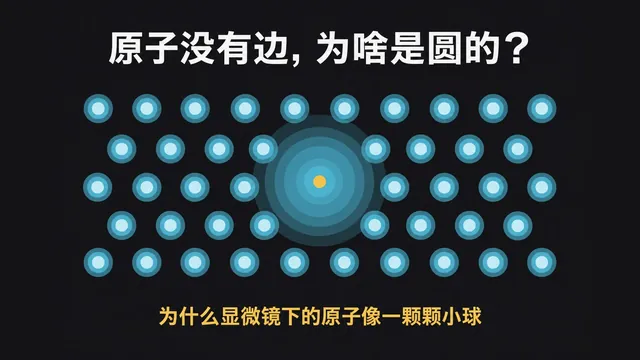
Atoms have no shell, just a fuzzy cloud. The microscope, like a thick glove, smooths it into round dots.
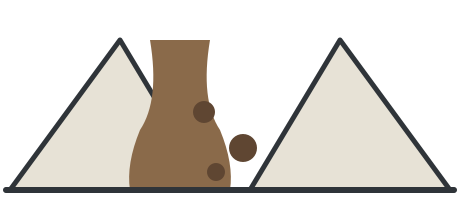
Not just "too much water": a whole gully of rock, mud and water that moves like wet concrete. What it is, the warning signs, and which way to run.

A place where you can go in but never come out, not even light. What it is, why nothing escapes, how we 'heard' two collide, and why Earth is safe.

The ten cloud types, learned through five Latin roots and a three-story sky: why "alto" clouds aren't the highest and which one brings thunder and hail.