
A poor kid and a rich kid are not playing the same game, and haven't been since day one.
This isn't about who is smarter or who works harder. It's that the two kids are holding completely different rulebooks.
A psychologist brings a five-year-old into a room, puts one marshmallow on the table, and says: "I'm stepping out for a bit. If you can hold off eating it, I'll give you two when I get back."
They followed those kids for fifty years, and the result looked solid: the kids who waited later got better grades, held steadier jobs, landed in prison less often, were healthier, and even lived longer.
So the whole world learned one lesson: people who can wait go far.
Well-off home: Mom and Dad say "next week we're going on a trip," and next week they really go. The kid learns that promises count, so of course they wait for the second marshmallow.
Poor home: Mom and Dad say "next week we'll go out for a nice dinner," then the paycheck falls short and it doesn't happen. The kid learns that promises often fall through.
So the poor kid who eats the marshmallow right away isn't foolish. He's being smart.
In his experience, the second marshmallow probably isn't coming. He's reading his real situation correctly.
Why teach obedience? Because in that situation it really is the best strategy: talk back to a cop and you might get locked up, talk back to your boss and you might lose your job. Telling the kid to stay quiet is a way of protecting him.
Because when adults raise a child, the real goal in their heads isn't "make this kid a success" —
The teacher who gave this lecture used himself as an example: he signs his three kids up for no classes at all. They just play wild, tell stories, and talk family matters over together. The result, in his words: "We have no friends in China, and our relatives think we're crazy."
He offered four paths, and every one has a price:
He took the first path himself: he emigrated with his family at six, his dad was a dishwasher, and later he won a scholarship to study in the US. But he said something honest: "That was luck. You can work like crazy, but the odds are against you."
Why does a stable society suddenly turn upside down? His answer: the ones who flip the table are never the poorest. They're the ones who have "some, but not enough."
The seats at the top are limited, yet the rich keep multiplying and their appetites keep growing. The people who can't get a seat go and recruit the ones below to overturn the whole thing.
He calls this "starting a new game"
A hundred people are playing cards. Ten of them keep winning, and only they can win. The other ninety say, "This game is broken, let's start over." The ten say, "No, I'm having a great time." If they can't agree, the ninety have no choice but to flip the table.
He says every regime change in human history, once you peel off the wrapping, makes the same promise: cancel your debts, give you a piece of land, stop you being a slave.
He also missed two paths: one is starting a business. You don't have to leave home or have anyone die, and over the past few decades more people have climbed up this way than any other. He never mentioned it. The other is when something brand new appears: a new field nobody has claimed yet is a fresh game without anyone flipping a table.
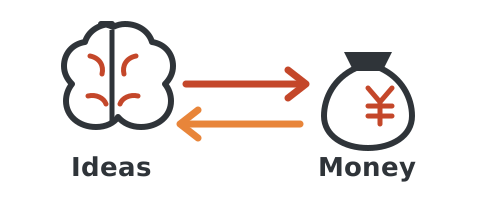
Does your thinking decide your wallet, or your wallet decide your thinking? Neither: it is a loop, and loops can be pushed.
The "smart" in smart switches and plugs is a bought-in part. Plus three things worth knowing before you buy.
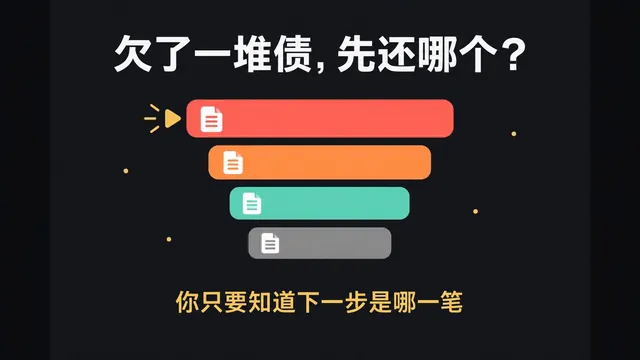
Like a fire, a leak and a dead bulb at once: sort debts by what happens if you don't pay, pick snowball or avalanche, map 13 weeks ahead, and talk early.
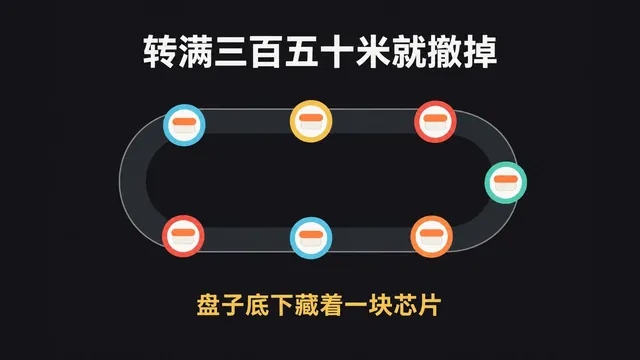
Why does sushi on a belt stay fresh? Every Sushiro plate carries a tiny chip that tracks how far it has travelled; after about 350 metres it comes off, and the same data tells the kitchen what to make.