A tick on a form is drawn by the person himself. Whether the job was really done takes someone actually going to look.
Put simply: a self-report says "I think I did it." Someone else looking tells you "it was done."
Doctors and nurses must wash their hands going in and out of patient rooms, a rule that saves lives. Researchers checked both sides: first they asked staff how often they washed, then sent people to actually watch.
They weren't lying on purpose. People sincerely feel they did it, and the times they skipped when things got busy, they simply don't remember.
A hospital in Canada installed automatic sensors in its corridors to log every handwash. Then they compared: what difference does it make whether an inspector is present?
The moment people see the inspector, they put on a show; once he leaves, they go back to normal. So even a surprise spot check shows you the "performance version."
This is the famous "Hawthorne effect": when people know they're being watched, they act differently.
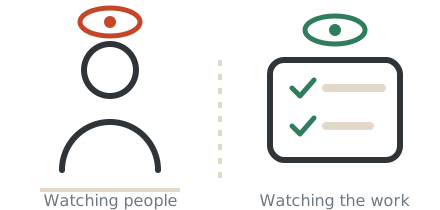
392 restaurants installed audit software: 22% less theft, 7% more sales. A factory hung a curtain: 10-15% more output. Watch the work, not the people.
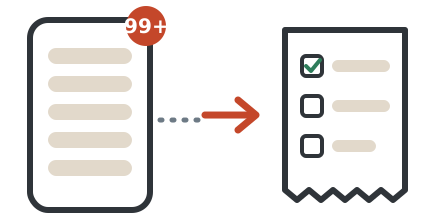
Notifications get swiped away; a slip of paper has to be finished. What hospital alerts and a WHO checklist teach us.
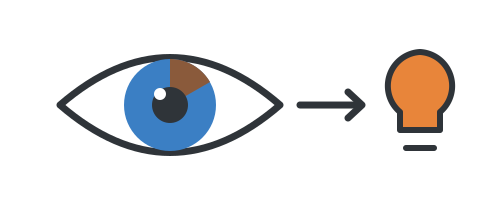
The 3Blue1Brown style: pose a question, draw it, let you discover it, and name it last. Ask an AI to explain "like 3Blue1Brown" and hard things get clear.
ASD-STE100: the strict one-meaning-per-sentence rulebook behind aircraft manuals, and the one line that makes AI explain things clearly.