Pull the wood.
Why does the
boil stop?
For everyone who cooks
Can't play sound? The illustrated version is right below.
Read the transcript
The full narration of the video.
When water stops boiling, it isn't because it got cold. You're cooking noodles, and the pot is rolling with big bubbles. Turn off the heat, and in two or three seconds, the bubbles are gone.
Stick a thermometer in right then, and it still reads almost a hundred degrees. Just as hot, so why isn't it boiling? First, look at where the bubbles come from.
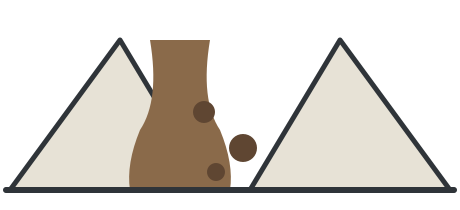
They all start at the bottom of the pot. The bottom sits right on the fire, a few degrees hotter than a hundred. There, water turns into steam, swells into a bubble, and shoots up.
But turning water into steam takes a huge amount of heat. Turning one gram of boiling water into steam takes enough heat to bring over five grams of ice-cold water all the way to a hundred. So while it boils, water lives paycheck to paycheck.
Every bit of heat the fire hands over goes straight into bubbles. Nothing saved. A bigger fire won't make it hotter. It just bubbles harder. That's why boiling water stays right around a hundred degrees.
Pull out the firewood, and the paychecks stop. Those few extra degrees at the bottom are spent in seconds. The water's still hot, but a hundred degrees is all it has left. Not one degree to spare, so no more bubbles.
Steam still drifts off the top: the surface spending its savings, bit by bit. So the water slowly cools. An old Chinese saying puts it this way: stirring up the soup won't stop the boil; pulling the firewood will. Fu is the pot; xin is the firewood.
Scooping the soup means lifting boiling water with a ladle and pouring it back. It cools a little in the air, and the bubbling pauses. But the fire keeps burning, heat keeps pouring in, and seconds later it's boiling again.
No matter how fast you scoop, the fire refills it faster. Splashing cold water into dumplings works the same way: each splash stops it once. Leave the fire on, and it boils right back. Pulling the firewood cuts off the source. Only then does it really stop.
That's why the phrase came to mean: fixing a problem at its root. In physics class, this is called the heat of vaporization. Water turning into steam carries off a big load of heat. The fire is where that heat comes from.
Every bubble that rises is a chunk of heat carried away. Next time you boil water, count as you turn off the heat. Cast iron and electric coils keep going a little longer, because the metal still holds some heat.
Take a guess: once the heat's off, how many seconds will your pot keep bubbling?
In one line
Water keeps boiling because the fire keeps sending heat in, and the water spends all of it on bubbles right away. Pull the firewood and the heat supply is cut. The bubbles stop — but the water is still almost 100°C.
What you think
vs. what happens
so it stops boiling
it's still almost 100°C
around 100°C
It just bubbles harder
Where the
bubbles come from
Textbooks call this the heat of vaporization: turning water into steam takes a lot of heat.
How costly
are bubbles?
For the same 1 gram of water, the heat each job takes:
The heat that turns 1 g of boiling water into steam could heat over 5 g of cold water from 0 to 100°C. So once the bubbles stop, the bottom's extra heat is already spent.
Boiling water lives
paycheck to paycheck
Steam still drifts off the top: the surface is slowly spending its savings, so the water cools bit by bit.
Ladling the soup
vs. pulling the wood
An old Chinese saying: "Ladling the soup to stop the boil is no match for pulling the firewood from under the pot." It compares two ways to stop a boil:
up and pour it back
But the fire still burns, so it boils again in seconds
out from under the pot
So in Chinese, "pull the firewood" came to mean: fix a problem at its root.
It happens
on your stove
bubble longerThey store heat
and pass it on slowly
No bubbles
≠ cool
it's still near 100°C No bubbles only means the bottom's extra degrees are spent. Grab the pot or test the water now and you'll still get burned.
count when
you turn it off
does your pot keep bubbling?
Quick check
A few seconds after you turn off the heat, the bubbles stop. About how hot is the water now?
Boiling water lives paycheck to paycheck: all the fire's heat goes into bubbles. Heat off, the extra runs out in seconds. Still ~100°C.