
Can't play sound? The illustrated version is right below.
The full narration of the video.
Two hotels. The rooms are about the same size, the beds about as soft. One has four stars, the other has five. The prices can be far apart. So what does the extra money buy? Mostly, the answer isn't in the room. It's in the people. Many European countries share one rulebook for hotel stars. Let's open it and compare.
Start with the front desk. Four stars: someone's there at least fourteen hours a day. You can still reach someone at night. Five stars: staffed around the clock. Hungry at midnight? Four stars: for at least twelve hours a day, drinks can come to your room. Five stars: food and drinks, any hour. At the door, a five-star hotel has someone to park your car. Someone to carry your bags. And one person whose whole job is booking your dinner and pointing the way. The concierge.
Back in your room at night, someone has already been in. The covers are folded back, the lights are low. You just lie down. That's called turndown service. Shirt wrinkled? Someone irons it. Shoes dirty? Someone shines them. Button off? Someone sews it on. A five-star hotel must offer all this; a four-star doesn't have to. One of America's best-known rating guides sends inspectors in unannounced, staying like ordinary guests. They score against up to nine hundred standards, one by one. Most of the points are about service.
In their book, four stars means service is already excellent. Five stars means it's tailored to you, every single time. That's why five stars is hard to earn. On its 2026 list: three hundred forty-three five-star hotels worldwide, and seven hundred eight with four. One more thing. There's no single star system for the whole world. Each country and each guide sets its own. In some places, hotels just award themselves. That seven-star hotel you've heard of? No rating body ever gave out seven stars.
So the beds at four and five stars may be just as soft. The extra money buys people who are always there, who think of things before you do. Next time you book, ask yourself: tonight, do I need a good bed, or a whole team on call?
The rooms are similar. The extra star is mostly about people: someone always there, thinking ahead for you.
Many European countries share one rulebook for hotel stars. Here are a few differences between four and five stars in its current edition.
Here's how one of America's best-known rating guides does it:
For them, four stars means service is already excellent. Five stars means it's tailored to you, every single time.

Jim Rohn's 1981 ten-minute talk: your income can't outgrow you, plus three things you can start on today.

The marshmallow test was overturned: kids who eat it aren't weak-willed, they just don't trust promises. How two worlds grow apart, and what changes things.
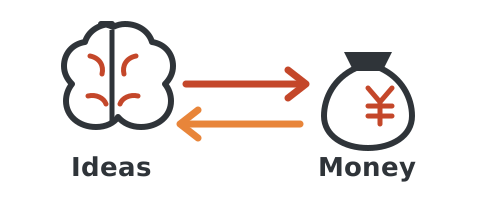
Does your thinking decide your wallet, or your wallet decide your thinking? Neither: it is a loop, and loops can be pushed.
The "smart" in smart switches and plugs is a bought-in part. Plus three things worth knowing before you buy.