When you cut something,
what do the atoms do?
Can't play sound? The illustrated version is right below.
Read the transcript
The full narration of the video.
You press the knife into a tomato. The skin holds, and the tomato just squashes. Switch it up, draw the blade back and forth, and it sinks right in. Same knife. So what changed? The answer is under the edge. Let's follow the blade and zoom all the way in.
At a thousand times, a sharp edge isn't a line at all. It's a rounded rim, about a hundred and fiftieth the width of a hair. Zoom further and you can count atoms. Even a good kitchen knife is about two thousand atoms wide at the edge. The thinnest razor blade is still around a hundred. The edge is far bigger than an atom: it can't split atoms in half.
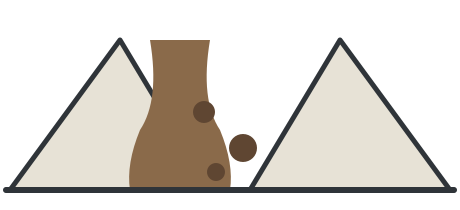
So what does it actually cut? Look at the tomato side. Inside the tomato, atoms hold on to each other, like kids on a playground standing in line, holding hands. Cutting never chops the kids. It pulls their hands apart.
The edge is so narrow that all your push lands on one thin line. Press with the weight of a bag of sugar, and at first contact the pressure under the edge can top a thousand times air pressure. The hands stretch tighter and tighter. The first to give are the ones right in front of the edge. Snap. They let go. The gap opens before the blade even touches them. All the knife does is keep prying that gap wider and pushing it ahead.
Then why does pressing straight down squash it? The tomato is soft. Push, and the whole thing gives way. The force spreads out, and the hands stretch without breaking. Draw the blade, and the edge scrapes sideways along the skin. The patch right underneath gets yanked hardest, so a gap opens fast, before the tomato can squash. In 2012, researchers in France and the US experimented with soft jelly: same idea. Though that was jelly, not tomatoes.
Push the two halves back together. Will they stick? No. The moment a fresh cut meets air, its free hands get grabbed by stuff in the air, like slipping on gloves. Fresh-cut metal: covered in under a hundred-millionth of a second. This is where the playground idea breaks down: kids can just hold hands again, but an atom's free hand gets taken by something else.
And with no air? In space, two clean pieces of metal that touch can stick for good: welded without heat. It's called cold welding. Last, the knife itself. Its edge atoms get pushed and pulled too. After enough cuts, the edge curls and chips, and the knife goes dull. So next time you slice a tomato, don't bear down. Draw the knife back and forth.
Then come back and tell us: when you pressed straight down, did your tomato squash first, or split first?
In one line
A knife never splits atoms. It pulls apart the "hands" atoms hold, and the gap always opens just ahead of the edge.
Zoom in on the edge
The edge is far bigger than an atom. It can't split one in half.
A line of kids holding hands
Picture the atoms in a tomato as kids on a playground, standing in line and holding hands. Cutting doesn't chop the kids. It pulls their hands apart.
The edge is so narrow that all your push lands on one thin line. Press with about a kilogram, and at first contact the pressure under the edge can top a thousand times air pressure.
The hands stretch tighter, and the ones right in front of the edge give first. The gap opens before the blade touches them. All the knife does is keep prying that gap wider and pushing it ahead.
Why a tomato squashes
In 2012, researchers in France and the US found the same idea with soft jelly. They cut jelly, not tomatoes.
Why the halves won't stick back
Here's where the playground idea breaks down: kids can hold hands again, but an atom's free hand gets taken by something else. Fresh-cut metal is covered in under a hundred-millionth of a second.
Next time you cut a tomato
Slice back and forth Let the edge scrape the gap open sideways, and the tomato won't squash first. A dull knife has a wider rim, so the same force spreads out and cutting gets harder.
Their hands let go
Quick check
When a knife cuts a tomato, what actually comes apart at the atomic level?
The edge is thousands of atoms wide, so it can't split atoms; it just pulls the kids' held hands apart.