
Can't play sound? The illustrated version is right below.
The full narration of the video.
Archaeologists keep digging up ancient cities underground. So is the ground rising every year? And if it keeps rising, could it one day reach space? The short answer: ancient cities got buried as layers piled up right where they stood. The ground as a whole isn't rising forever.
The first kind of piling is done by people. Many ancient homes were built of mud brick, and when they fell, the mud stayed put. Later people didn't clear it away. They just built on top. That's what happened at Troy. One hill holds nine cities, piled about fifteen meters high over three thousand years.
The second kind is nature covering it all at once. In the year 79, a volcano erupted, and Pompeii was buried under four to six meters of ash. Floods leave mud and winds bring sand, and over time, they can cover a city too. So will the ground reach space? No. High places are always being worn down.
Rain and rivers wash sand and mud into the sea, about twenty billion tonnes a year. And the seafloor slowly sinks back inside the Earth. The oldest seafloor is only about 180 million years old. Earth's surface is like a slow conveyor belt. Piled up here, washed away there, then sunk back underground.
So ancient cities hide in piles, not in a growing Earth. What archaeologists dig up are the days left behind, layer by layer.
Ancient cities got covered
by layers piling up right where they stood.
The ground as a whole isn't rising forever.
No. High places are always being worn down.
Put simply: Earth's surface is like a slow conveyor belt. It piles up here, washes away there, and sinks back underground. It doesn't just keep growing.

Same laptop, new bag, and it feels lighter. The weight didn't change: a good pack keeps it close, puts it on your hips, spreads it out, and stops it swinging.

A cubic metre of wood holds about a tonne of CO2. Swap some cement and steel for wood and buildings store carbon instead of releasing it — if the trees are replanted.

No one has been to Andromeda and no ruler reaches that far. Astronomers built a four-rung ladder that starts with your thumb.
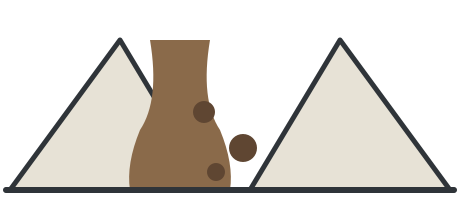
Not just "too much water": a whole gully of rock, mud and water that moves like wet concrete. What it is, the warning signs, and which way to run.