Why the sushi screen
keeps you tapping
Can't play sound? The illustrated version is right below.
Read the transcript
The full narration of the video.
Why is the ordering screen at a sushi place so hard to stop tapping? You meant to have six plates. By the time you pay, eleven are stacked on the table. From the moment you sit down, that screen is quietly helping you order more.
First you meet the big photos. Glossy salmon, one tap, and it's ordered. No waving, no talking, and nobody standing there watching you. That nobody's watching matters more than you'd think.
Researchers compared the same fast-food chain: ordering from a person at the counter, versus tapping a screen yourself. People on the screen spent about fifteen percent more, and ordered more sweet and fried stuff too. Their guess: asking a person for one more fried chicken feels a bit awkward. Asking a screen, that feeling's gone.
The screen also does something staff often forget: it asks, every single time. Add one more? Want a drink with that? A busy waiter forgets. The screen never does.
Keep eating, and it starts to feel like an arcade. At Kura Sushi in Japan, each table has a little slot for empty plates. Every five plates you drop in, the screen runs a prize game. Win, and a capsule toy pops out.
By plate four, you really want to round it up to five. Sushiro in Japan tried a giant tabletop screen. Order enough, and you get to play a game and win a small gift. One full-screen menu page, in the trial stores, didn't even show prices.
With no price in sight, only one question is left: do I want it? That screen is like a very special sales clerk. It never gets tired, never forgets to suggest something, and never gives you a look.
Its real name is a self-ordering screen. And that constant "add something?" has a trade name: cross-selling. The bubble tea kiosk, the scan-to-order mini app asking if you want extra toppings: same trick. But the screen's biggest power may not be getting you to order more.
One study of a restaurant chain found that after tablets went on the tables, each check grew by only about one percent. What really changed was something else: meals got almost ten percent shorter. You leave sooner, the next table sits sooner, and each table sells about ten percent more per minute.
These are averages. Not everyone who sits down orders more. So that screen helps you order one more plate, and helps the restaurant seat one more table. Where else have you met a screen you just couldn't stop tapping?
Next time at conveyor sushi, pick a plate count when you sit down. Stop when you hit it.
Six plates become eleven
You meant to have six plates. When you pay, eleven are stacked on the table.
It is not just your appetite. From the moment you sit down, the screen by the table helps you order more, one trick at a time.
Nobody is watching you
Researchers compared the same fast-food chain. People who ordered on a screen spent about 15% more than people who ordered from staff at the counter. They also ordered more sweet and fried food.
The researchers gave two reasons. The screen always asks if you want to add something. And with nobody watching, you feel less awkward.
"Add one more?"
Busy staff forget to ask. The screen never does. It asks every time.
Five plates,
one prize game
By plate four, you really want to round it up to five.
Sushiro in Japan tried a giant screen built into the tabletop. Order enough, and you can play a game and win a small gift. A reviewer also found one full-screen menu page that showed no prices in the trial stores. With no price in sight, only one question is left: do I want it?
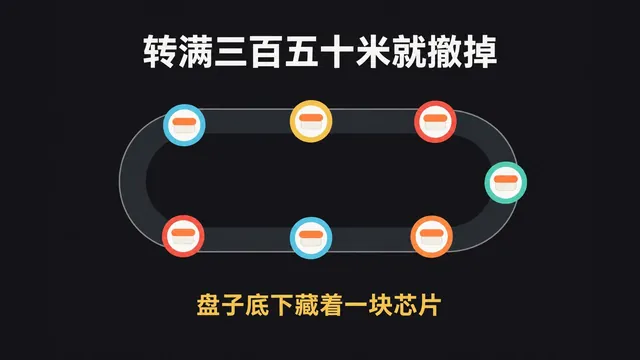
Sushiro plates also hide a chip under each one. See our Sushiro plate episode.
A sales clerk who never gets tired
Its real name is a self-ordering kiosk. That constant "add something?" has a trade name: cross-selling.
The bubble tea kiosk and the scan-to-order app that ask about extra toppings use the same trick.
What the restaurant
really gains is a table
A study of one restaurant chain found that after tablets went on the tables, each check grew by only about 1%. The big change was something else: meals got almost 10% shorter.
You leave sooner, so the next party sits sooner. Each table sold about 11% more per minute.
These are averages. Not everyone who sits down orders more.
and the restaurant one more table.
Quick check
After ordering tablets went on the tables, what changed the most in the study?
The tireless sales clerk only added about 1% per check; the real gain was each table serving more guests.