
Can't play sound? The illustrated version is right below.
The full narration of the video.
A cubic metre of wood holds about a tonne of carbon dioxide. The tree pulled it out of the air, breath by breath. That's why some people say wood is the material we should use most. How much truth is in that? Start with how a tree grows. It breathes in carbon dioxide, keeps the carbon, and turns it into wood. Dry wood is about half carbon.
Build a house from wood, and that carbon is locked into the walls. It stays locked up as long as the house stands. Now look at how we build today. Cement means baking limestone in a huge kiln at over a thousand degrees. As it bakes, the rock itself gives off carbon dioxide. Making cement causes about 8 percent of the world's CO2 emissions.
One gives off carbon as you build; the other stores it. Swap some cement and steel for wood, and the balance flips. But doesn't wood burn? When a thick wooden beam catches fire, its surface turns to char. That char works like a heat blanket, protecting the wood inside. It burns inward less than a millimetre a minute. Engineers can calculate how long it will hold.
Today's building timber comes as big panels, glued in crossing layers. Towers of twenty-five floors have already been built mostly from it. But there's a catch: every tree cut must be replanted. Wood clear-cut from old forests destroys a carbon store instead. Wood also fears damp and insects, so it doesn't suit every place. It can't replace all steel and concrete.
So the fairer way to put it: where wood works, use more of it, and plant the trees back. Next time you see a wooden building, think of it this way: it's a piece of forest that moved into the city.
Wood holds carbon a tree pulled from the air.
Build with it instead of some cement and steel,
and construction stores carbon instead of releasing it.
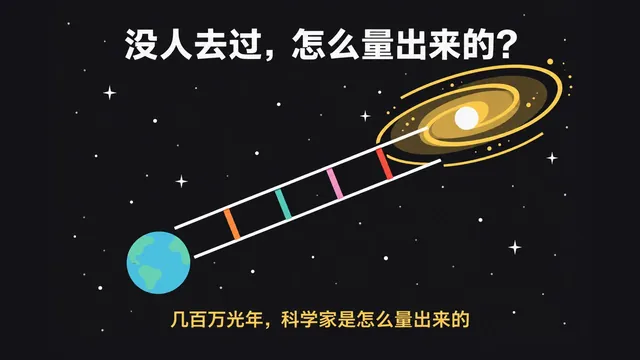
No one has been to Andromeda and no ruler reaches that far. Astronomers built a four-rung ladder that starts with your thumb.
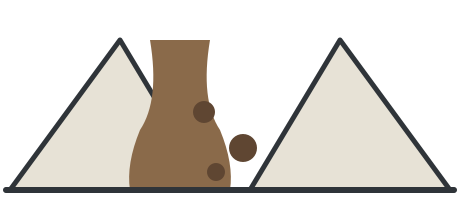
Not just "too much water": a whole gully of rock, mud and water that moves like wet concrete. What it is, the warning signs, and which way to run.

The Chinese names for kiwifruit: seeds left Yichang for New Zealand in 1904, it was renamed in 1959, and the price gap comes from variety and brand, not name.

A place where you can go in but never come out, not even light. What it is, why nothing escapes, how we 'heard' two collide, and why Earth is safe.