A palm-sized black-and-white square, stuck on something.
One glance from a camera far away, and it knows
which number it is, how far, and which way it faces.
It isn't meant for people. It is drawn for machines. To a human it's just a pile of black and white squares.
Put simply: a QR code is for a phone to scan up close; this is for a machine to see from afar. And it doesn't just identify, it locates.
Step four is its key trait: missing one is fine, getting one wrong is not. Get it wrong once and the machine heads to the wrong place.
What they share: they all want a machine to know where something is right now, without buying piles of expensive equipment.
The other: if the sticker is dirty, torn or half-covered, it can't be recognized. It relies on the paper being intact, not on being clever.
A lab at the University of Michigan in the US made it around 2011, and it has been free for everyone to use ever since, including for business.
The commonly used set has 587 numbers, enough for most situations. The sticker itself is just printed paper: the cost is a sheet of paper and a bit of ink.
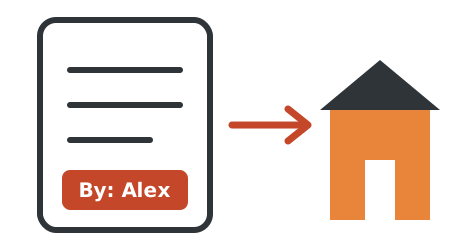
A sticky note on a recipe: copy it, change it, even sell it, just keep the author's name and expect no refunds.
A script is a to-do note a computer follows line by line. How it differs from doing things by hand, what it's used for, and the one thing it can't do.
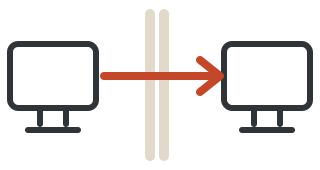
A key card for all your machines: wherever they are, they act like they're in one room. What it saves you, how it works, and what it isn't.
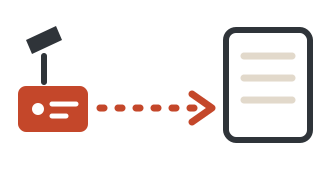
A small computer placed where things happen: it looks first, picks what matters, and sends only that to a big one far away. It sends less, not more.