20 pieces in this series — best read in order.
Using a sign-up page for a seafood dinner: walls, paint, switches, a shared notebook and a street address, no code required.
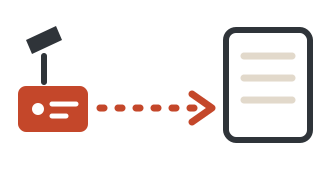
Key cards, hotel cards and anti-theft tags are the same trick: a battery-free tag that shouts its number back when a reader pings it.
WebSocket for total beginners: from "ask every five seconds" to "the other side shouts the moment something happens."
The whole toolkit: repos, commits, branches, pull requests, green squares. Treat it as save files in a video game and most of the jargon makes sense.
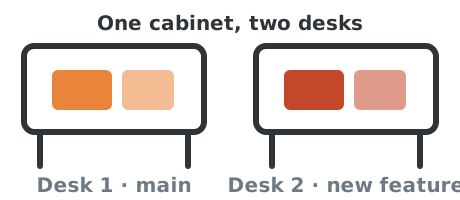
A branch is which lines of work exist; a worktree is the desk you lay one out on. Why a second desk beats copying, and when you need one.
A Raspberry Pi for total beginners: credit-card size, costs about $50, and it's slow but can stay on forever, watching over one small daily job.
Same thing on the outside, rearranged on the inside, like re-planning a kitchen's paths without touching the menu. Why it matters and how to do it safely.
A printed black-and-white square that tells a camera "which number, how far, which way": how it differs from a QR code, and why it refuses to guess.
A sticky note on a recipe: copy it, change it, even sell it, just keep the author's name and expect no refunds.
A script is a to-do note a computer follows line by line. How it differs from doing things by hand, what it's used for, and the one thing it can't do.
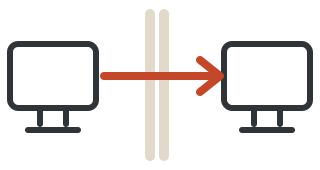
A key card for all your machines: wherever they are, they act like they're in one room. What it saves you, how it works, and what it isn't.
A small computer placed where things happen: it looks first, picks what matters, and sends only that to a big one far away. It sends less, not more.
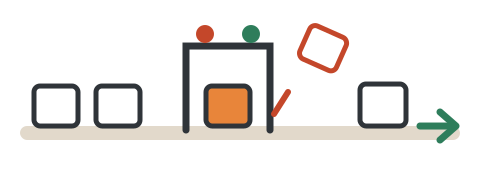
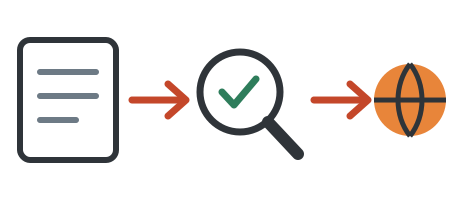
Every change gets re-checked by a machine and shipped only if it passes, like airport security. What CI and CD each do, and what a green light can't promise.
A web page you can install on your phone's home screen: opens like an app, works offline for pages you've seen, but can't replace a real app.
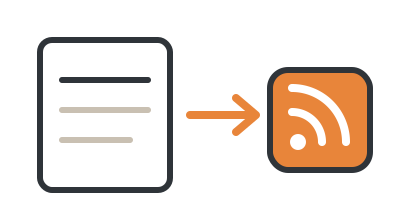
Subscribing to websites like a newspaper: new posts arrive in one mailbox, you choose what to follow, and nothing is pushed on you.
The world's shared address book: you remember names, machines use numbers, and DNS translates. How it looks things up, and why sites sometimes won't open.
Every submitted change is checked automatically before it goes live. What CI and a runner are, why they start on boot, and what they can't do.
The finished video is like a PDF; the project is the PowerPoint you can still edit. What's inside, what export does, why keep the project, and a common trap.
A robot walks the whole path like a real user and checks the result. What end-to-end testing is, and why teams use only a few.
Billions of tiny on/off switches follow a list, one line at a time: fetch, understand, do — billions of beats a second.