Little secrets
your dog won't admit
and finds the dog already ducking its head
Can't play sound? The illustrated version is right below.
Read the transcript
The full narration of the video.
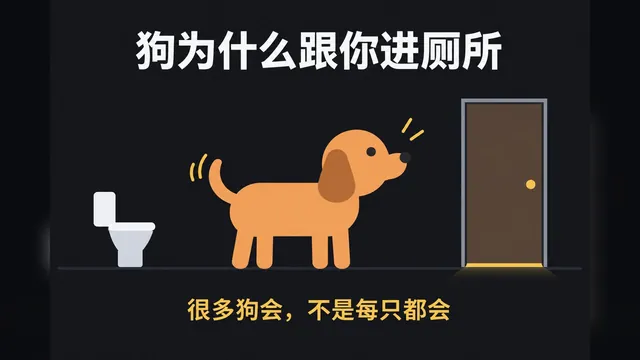
That guilty face your dog makes is copied from yours. You walk in to a chewed-up slipper, and its ears go flat, its eyes look up, its tail tucks in. It seems to say I'm sorry.
One dog scientist decided to take this apart and test it. The owner told the dog to leave a treat alone, then left the room. While they were gone, a researcher either fed the dog the treat or simply took it away.
When the owner came back, the researcher said whether the dog had eaten it, and sometimes lied. Based on that, the owner either scolded the dog or said hello as usual. The guilty face had nothing to do with the treat, and everything to do with the scolding.
And the saddest part the innocent dogs who got scolded looked the guiltiest of all. It's like a kid at home who drops their head the second a parent frowns, just to get through the moment. The kid remembers what they did; the dog mostly sees the face you're making right now.
Scientists call this appeasement behavior ears back, eyes away, lip licking, tail tucked, sometimes rolling belly-up. It doesn't mean "I did wrong." It means "please don't be angry." And that face isn't the only thing it keeps from you.
After pooping, many dogs kick back at the ground. It looks like burying, but it often leaves things more exposed. Their paw pads have sweat and scent glands, so those kicks leave their smell and scratch marks behind, telling the next dog I was here. Then there's grass.
Lots of people think a dog eats grass because its stomach hurts and it wants to throw up. But only about one in five grass-eating dogs often throws up afterward, and fewer than one in ten look unwell beforehand. For most dogs, chewing a bit of grass is just normal.
One more secret hides in its feet. In many dogs, the gaps between the toes smell like corn chips. That's bacteria that normally live on the skin, mixed with sweat and moisture. In a healthy dog, it's perfectly normal.
If it starts to stink and your dog keeps licking its paws, have a vet take a look. Scientists haven't figured all this out yet. Why dogs kick the ground is still a guess. Next time it gives you that guilty face, skip the scolding. Crouch down and pet it.
Tonight, while it's asleep, lean in and sniff its paws corn chips, or popcorn?
In one line
That guilty face is copied from yours.
Ears flat, eyes looking up, tail tucked: it looks like "I'm sorry." A scientist took this apart and tested it. The face isn't about what the dog did. It's about the look on your face.
The experiment that
took "guilt" apart
The owner told the dog to leave a treat alone, then left the room. A researcher either fed the dog the treat or took it away. When the owner came back, the researcher said whether the dog had eaten it, and sometimes lied. Based on that, the owner either scolded the dog or said hello as usual.
The guilty look had nothing to do with eating the treat. It came with the scolding.
In short: when a grown-up frowns, a kid ducks first. The kid remembers what they did. The dog mostly sees the face you're making right now.
What it's really saying
These moves have a name: appeasement behavior.
It isn't saying "I'm sorry." It's saying "please don't be mad."
Three more things
it won't tell you
Why dogs really kick, scientists are still guessing.
One smell
not to ignore
corn chips, or popcorn?
Quick check
That guilty, head-down look your dog gives: what is it most tied to?
The guilty look tracked the scolding, not the treat. Like a kid ducking when a grown-up frowns, the dog is reading your face.