85 pieces · best read in order
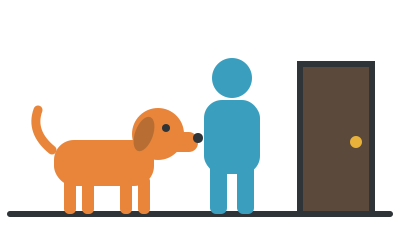
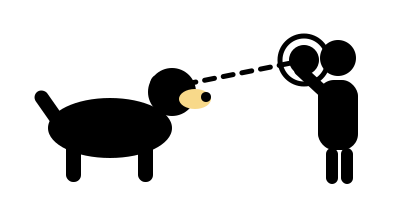
Common, but not every dog does it. Three research-backed reasons, three vet explanations not yet studied, and when following can signal separation anxiety.
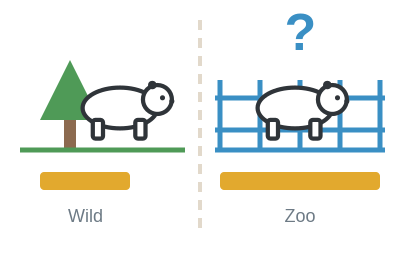
Most zoo animals outlive their wild cousins. But is a longer life a happier one? It depends on the animal and the zoo, plus three things to look for on your next visit.
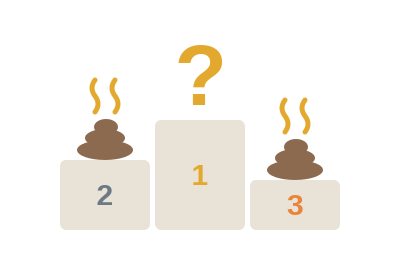
There's no official champion, but there is a pattern: the more meat an animal eats, the worse its poop usually smells. Then there are otters.
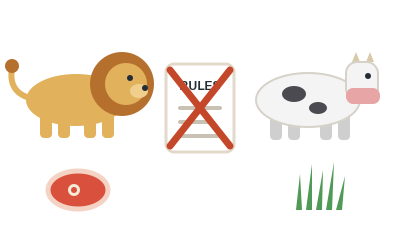
Nobody wrote animals a menu. Scissor teeth or millstone teeth, and gut helpers or none, decide what they can eat, shaped over generations.
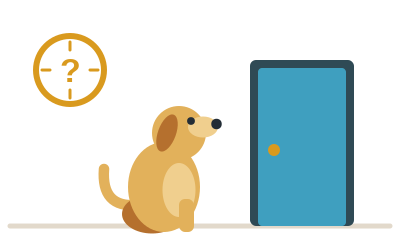
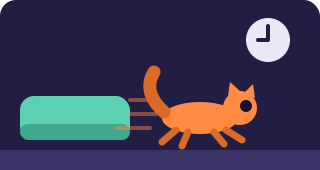
They can't read clocks, but body rhythms, routines and maybe scent tell them time has passed. They notice 30 minutes vs 2 hours, but not 2 vs 4.
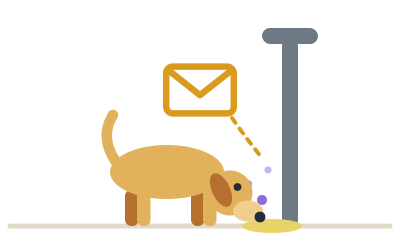
Every puddle is a signed letter: sniffing is reading, and peeing on top is writing back. Here's what's inside.
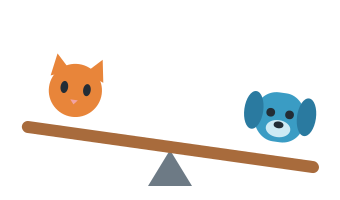
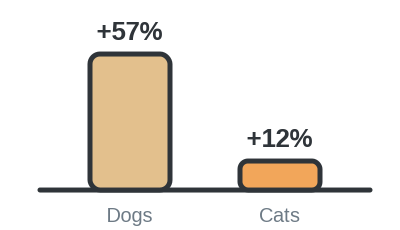
Worldwide, a few more people keep dogs. But in Europe and in China's cities, cats have pulled ahead. It all depends on how and where you count.
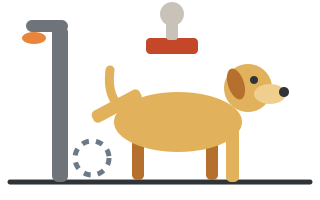
It isn't going to the toilet. It's stamping a mark, and out of ink, it stamps anyway.
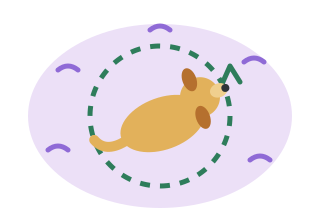
Turning before a nap is bed-making, and two slow turns aren't enough to make a dog dizzy. Plus the water-filled tubes in your ears.
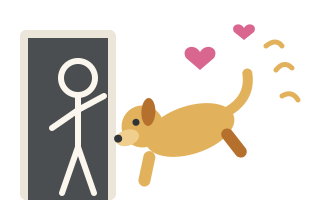
Hormones, happy tears and a brain that lights up: a dog's welcome is most like a toddler spotting Mom or Dad at kindergarten pickup.
A puppy's mouth is like a new kitchen: only milk, brand-new teeth, few bacteria. By three to six months, as teeth change, the milky smell fades.
Where a dog digs is what it means: by the bathroom spot it's signing its name, in bed it's making a nest, in the yard it has a job to do.
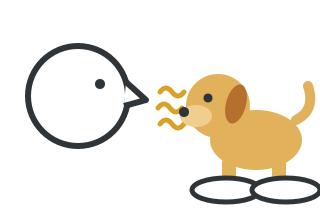
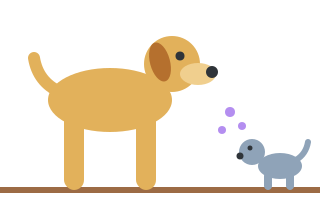
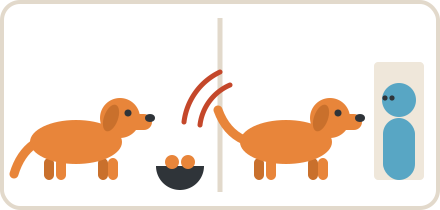
From far away, dogs spot other dogs by sight. Up close, the nose reads a scent business card that says which dog it is.
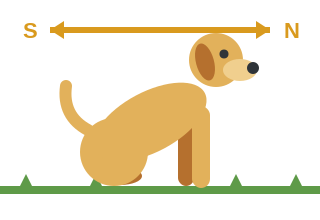
All that circling isn't stalling. Before squatting, a dog runs four checks, and often lines up north to south.
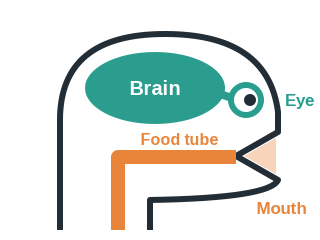
Eyes grow out of the brain; the mouth is the door of the food tube. A crawling worm set the layout over 500 million years ago.
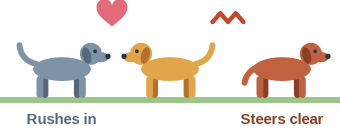
Dogs can't tell us, so we work backwards: the sniff, the play bow, a warm chemical inside, and the stiff body that says back off.
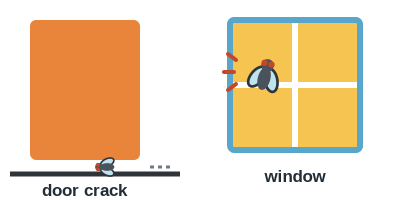
Flies follow smell to get in and light to get out. Indoors, the brightest thing is often a sheet of glass they can't see.
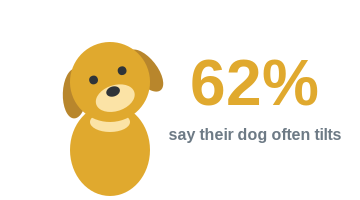
Dogs that know their toys' names tilt far more when they hear them. Ears, eyes and memory each offer a reason.
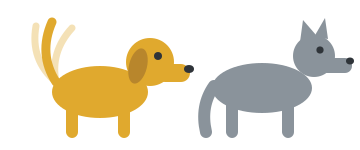
Wolves wag to say "you're the boss." Dogs wag far more. Did it come along with tameness, or did people pick the waggers?
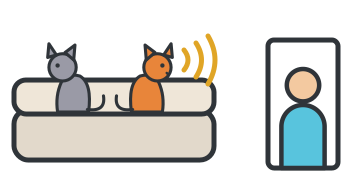
Cats rarely meow at each other, yet meow at you the moment you walk in. That sound is a kitten's call to Mom, kept just for you.
In experiments, dogs chose a stranger who petted them over an owner who only praised them, and the best part of a walk is the sniffing.
That leg isn't really under the dog's control: you've found a bug-kicking switch run by the spinal cord, not a sweet spot.
Chocolate, sugar-free gum, onions and grapes are fine for people. The catch isn't the food: a dog's body is missing one tool for each.
Most of today's 300+ dog breeds are under 200 years old. Dogs didn't evolve fast on their own: people chose for them, every generation.
Dogs are built for cold: an insulating coat and a heat loop in their paws. But they cool mostly by panting, so heat is their weak spot.
A dog's extra hearing is for higher and fainter sounds; for TV dialogue it hears about like us. What matters is sudden bangs and nonstop noise.
Seizure-response dogs can be trained reliably; early warning may come down to the nose, but the evidence is still thin.
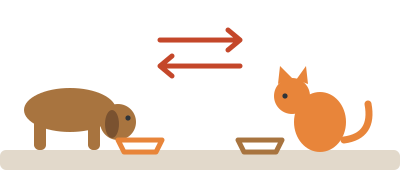
A stolen bite is no poison. But cats can't make enough taurine, so dog food harms their hearts and eyes; cat food is too rich for dogs.
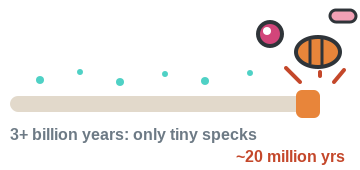
For 3 billion years the sea held only specks, then animals burst out. We question four suspects: fossils, oxygen, genes and eating.
A documentary said dogs love owners five times more than cats. Other experiments found two in three cats treat you as a safe base, like babies do.
That guilty look isn't an apology — your dog is reading your face. It can also hear whether your praise is real.
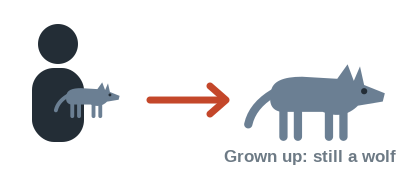
Dogs did come from wolves, but not from one pup carried home: a group of wolves at people's doors was picked, generation by generation, over thousands of years.
A cat's tongue is a comb that grows the wrong way, so fur can only go down. Dogs chew fur when they itch or are bored. Plus when to see a vet.
No superpower: a dog's gut squeezes itself like a toothpaste tube, and walking makes it squeeze harder. Humans have a bend that makes us stop and squat.
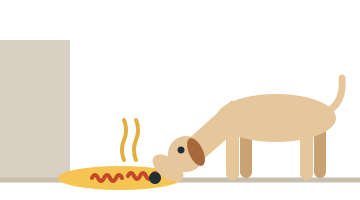
A dog licking the floor along the walls is often not bored: 14 of 19 such dogs had gut problems. Like gulping when carsick, it may be nausea.
Your doorstep is a dog message board. Plain water smudges the note but leaves it up; an enzyme cleaner tears it off, and a leash tug keeps it walking.
Sniffing alone is a small risk: the smell floats up, but rat-pee germs stay in the puddle. Licking and drinking are the real danger.
Cats eat six or seven small meals a day, peaking at dawn and dusk, and least at midnight. The 4 a.m. paw is their morning market meeting your sleep.
Windows shut, yet several flies pop out at once. They spent a week growing where you couldn't see: eggs, maggots, shells, then wings.
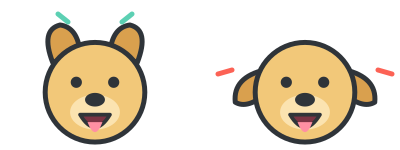
Not always: an open mouth just means a dog is working hard, like a computer fan. To tell happy from stressed, check whether the ears are forward or pinned back.
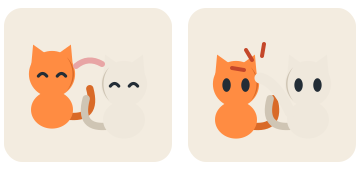
Most cat wrestling is play: listen for hissing, watch who ends up on top. Grooming and play fighting both say we're close.
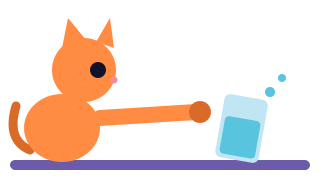
A cat tapping your glass is rarely mischief: it can't see well up close, so its paw does the feeling. Plus the hidden whiskers on its front legs.
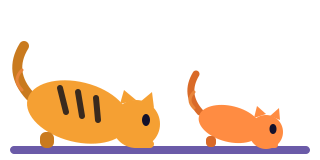
Tigers do it too. The wiggle most likely plants each back foot so the pounce won't slip, like a sprinter testing the starting blocks.
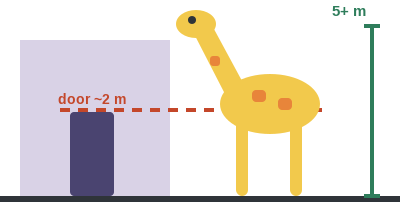
A giraffe is over five meters tall; your front door reaches its belly. Plus 34 kg of leaves a day, herds, and protection laws.
Cats sleep most of the day, save their hunting energy, and let it all out near dawn. A tiny noise is the valve.
Do dogs wag when no one is watching? An experiment found they wag far more with a person nearby, though stress stays the same. A wag is for you.
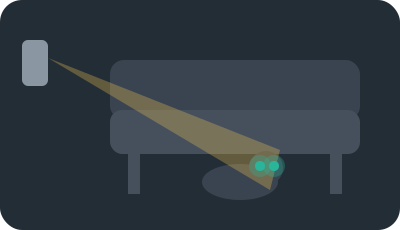
Cats' eyes make no light. A layer at the back works like a bike reflector, bouncing light straight back so it's used twice. In total dark, no glow.
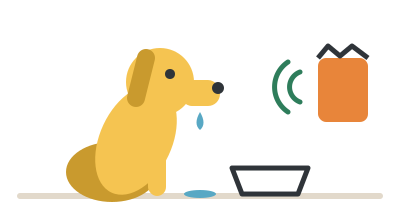
Your dog's drool often arrives before dinner does. It has learned the sound of mealtime, a conditioned reflex Pavlov first measured.
Dogs can tell whether you kept a toy on purpose or by accident. A clear-wall experiment and a football referee explain how dogs read your hands.
Your cat was weaned long ago, so why does it still knead your lap? It starts with nursing kittens, plus two other ideas and what to do when the claws hurt.
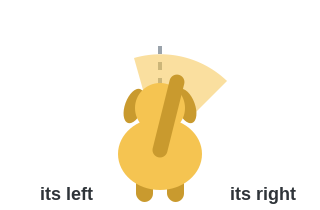
A wagging tail often leans to one side: right for an owner, left for a stern stranger dog. Other dogs can read it, like a turn signal nobody flips.
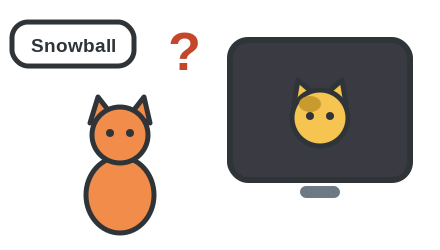
Cats know their names, their friends' names, your voice and your cat-talk tone. Whole sentences? Not yet.
Baby pigeons spend a month in high nests and leave at nearly adult size. A small gray cere gives the youngsters away.
Why do moths circle a lamp instead of flying straight at it? High-speed cameras show they keep turning their backs to the light.
A mantis isn't blind, just busy: only a small patch straight ahead is sharp, and when it hunts, its eyes and attention lock onto the prey.
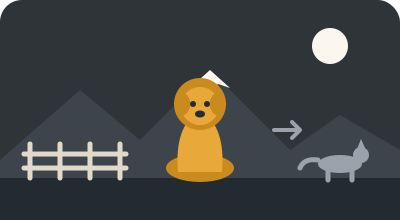
In an old Chinese fable, a fox walks ahead of a tiger and the animals flee. They feared the tiger. And a real hummingbird nests under hawks.
Four Scotties lived in the White House. No one person invented the breed: farmers bred it for work, then dog lovers wrote its recipe.
Huskies rank low on the obedience-based smartest-dog list, but they were bred to run and decide for themselves. Most wrecking comes from boredom. Tire them out first, then teach.
Reddish-brown paws on a white Westie come from porphyrin in saliva. Constant licking usually means itchy skin, and more than half of Westies get it.
A Shiba isn't stubborn, it just doesn't ask you. One box experiment shows why recall and handling are hard for new owners.
A “Teddy” is a Poodle with a teddy-bear haircut, not a breed. Even the fancy show cut started as work clothes for swimming.
Miniature Schnauzers bark at strangers far more than Labradors. It isn't stubbornness: fear, a rat-catching past that rewarded acting alone, and loose rules.
Half is mixed genes, half is the puppies you never saw grow up.
One treat and a Lab will learn: being easy to train and always hungry are the same thing. But it needs 1–2 hours of activity a day.
A golden greeted a burglar with a toy. Goldens were bred to fetch and greet, not guard. Here's why, and what actually protects your home.
The German Shepherd ranks third for dog IQ, yet it is the top police dog. The list is a spelling test; police dogs need every subject.
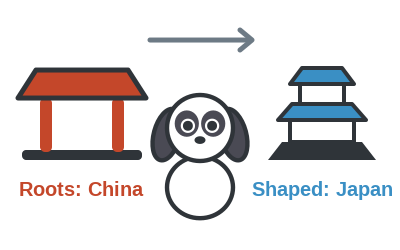
Its ancestors were Chinese palace dogs, but the breed got its look in Japan, so Japan is its country of origin.
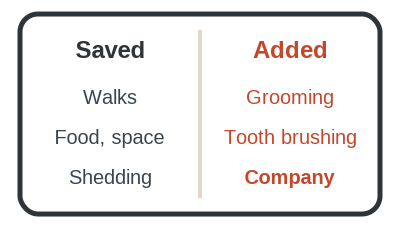
Yorkies are tiny, need short walks and barely shed. But their hair and teeth need daily care, and they hate being alone. One workday, tallied.
Palm-sized Poms come from a family of big northern sled dogs. People bred them smaller, one generation at a time.
Its real skill isn't fighting wolves. Genes borrowed from wolves let it breathe thin air, and like a goalkeeper it guards the flock by barking wolves away.
Brain buds shrink in hibernation and mostly regrow within hours. Curling up is self-defense. And pet hedgehogs shouldn't hibernate at all.
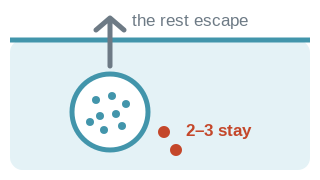
Aquarium bubbles reach the surface in a second or two and keep only 2–3% of their oxygen. Their real job is stirring, so every bit of water takes a turn at the surface.
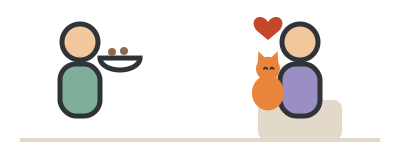
It's not about who feeds it. Research suggests cats favor the person who waits for them to come first, because the cat decides how long it lasts.
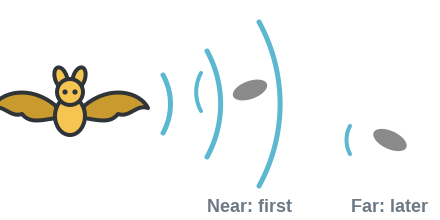
A bat shouts as it flies. Leaf echoes come back flat; a bug's beating wings make its echo flash.
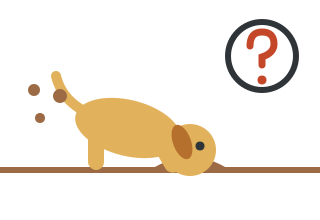
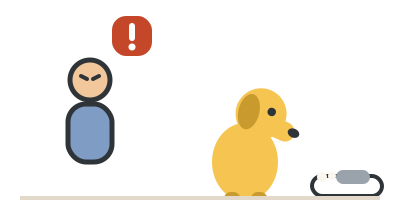
That guilty look isn't about what it did. Plus why dogs kick after pooping, eat grass, and have paws that smell like corn chips.
Cats don't sort habits into good and bad. They learn from what happens right after. Scolding counts as attention, only seconds matter, and ignoring gets louder first.
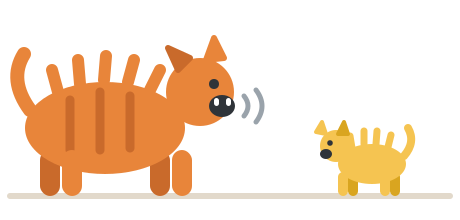
A hissing cat is usually scared, not angry. Tigers do the same thing, because both inherited this move from one shared ancestor.
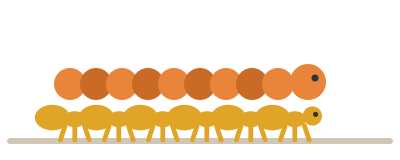
A few dozen tiny ants hauled a bait heavier than 1,900 of themselves. The hard part isn't strength but direction: one ant who knows the way leads.
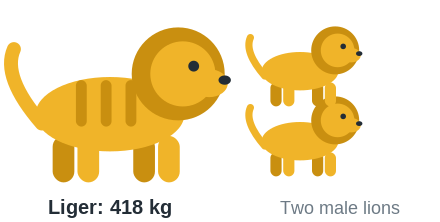
Both are hybrids, yet ligers can weigh as much as two lions. The answer: dad's genes press the gas, mom's press the brake.
The deep sea doesn't crush soft things, it crushes things full of air: fish are mostly water, while subs must carry air inside.
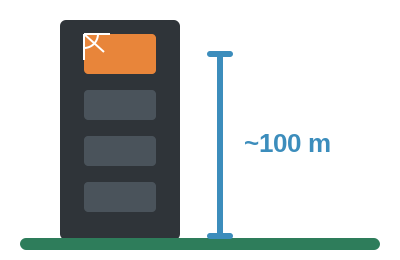
Spiders climb glass, fly on silk and ride lifts in boxes. But the one in your corner was most likely born in the building.
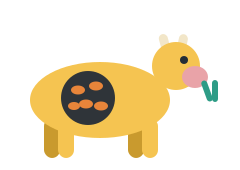
A cow looks like it eats grass, but most of its protein comes from bacteria it farms in its stomach.
Bug spray stops working because mosquitoes breed in days. What sets evolution's pace isn't lifespan but how soon animals have young.
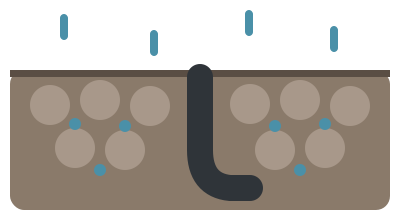
Burrows rarely flood: soil soaks up rain, worm tunnels act as drains, and prairie dogs build doorsteps. Worms after rain probably aren't fleeing.
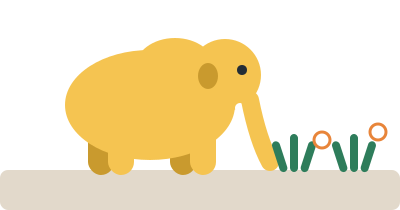
The Ice Age north wasn't an ice sheet but a huge, dry, sunny grassland. Here's how mammoths found food and kept warm.