
Can't play sound? The illustrated version is right below.
The full narration of the video.
You might think a new computer is new all the way through. In fact, the moment it powers on, it pretends to be a chip from 1978. Computers are full of designs like this: not quite right back then, and now too late to change, even though we know better. Why can't we change them? Think about the sockets in your home.
The shape of the plug was settled early, almost casually. Then every appliance was built to match it. Now if you want a better shape, every appliance in the city has to change with it. Nobody can pull that off. Let's look at the three most famous sockets in computing, one at a time.
Number one: the empty box. Inside a program, everything lives in labeled boxes. In 1965, a scientist named Tony Hoare let those boxes be empty, simply because it was the easiest thing to build. The trouble is, a program reaches in, finds nothing there, and crashes on the spot.
In 2009, he stood on stage and apologized, calling it his billion-dollar mistake. But the world's software already depends on empty boxes. So we keep using them, and keep being careful. Number two: house numbers. Every device online needs a number so others can find it.
The original system had only about 4.3 billion numbers. Back then, that seemed like more than enough. Then in 2011, the global pool ran out. Actually, a new numbering system was designed back in 1995, with more numbers than we could ever use.
But switching means every router, website and phone in the world has to switch too. Thirty years on, only about half have. Number three: that old relic from the beginning. When most computer chips today power on, they first act like a chip from 1978, then switch step by step into modern mode.
All so that software from decades ago still runs today. The chipmaker did plan to remove these relics. After asking around, it dropped the plan in 2024. So none of this is about anyone being foolish. Everyone builds on top of the earliest decisions, and they turn into the foundation.
Your new phone can open a file from ten years ago precisely because everyone chose to carry the baggage instead of starting over. So next time you set a rule that others will build on, give it one more minute of thought. What old rule around you is stuck for good? Tell us in the comments.
A rule set casually at the start, then followed by everyone, can never be changed again.
When most computer chips power on today, they first act like a chip from 1978, then switch step by step into modern mode. Nobody is being lazy. The old rule is simply holding up too many things.
Put simply: changing the thing is easy. Changing everything that depends on it is not.

Using a sign-up page for a seafood dinner: walls, paint, switches, a shared notebook and a street address, no code required.

Key cards, hotel cards and anti-theft tags are the same trick: a battery-free tag that shouts its number back when a reader pings it.
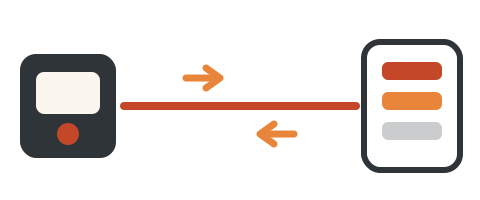
WebSocket for total beginners: from "ask every five seconds" to "the other side shouts the moment something happens."
The whole toolkit: repos, commits, branches, pull requests, green squares. Treat it as save files in a video game and most of the jargon makes sense.