
Can't play sound? The illustrated version is right below.
The full narration of the video.
Turn on the tap, and water swirls into your glass. The rules behind this little thing were written down two hundred years ago. But there's a question about those rules with a million-dollar prize on it. This September, someone said it had been cracked. So, has it? First, the rules. They're called the Navier–Stokes equations, and they say one thing: push or squeeze some water, and here's how it will flow next.
Weather forecasts, airplane design, how blood moves through your veins — all of it is worked out with these rules. They work beautifully. But mathematicians want to ask a much tougher question. Say the water starts out flowing nice and smooth. If you follow the rules forward in time, could the speed at some point, at some moment, shoot up to infinity?
At that point, the rules simply stop working. Mathematicians call this a blowup. Why worry about that? Because whirlpools have a habit: the tighter they get, the faster they spin. Like a skater pulling in their arms and suddenly spinning fast. But water is also a little sticky. Like a foot on the brake, it smooths out whirlpools that get too small.
Spinning faster on one side, braking on the other — which one wins? To this day, nobody has been able to prove it. In 1934, the mathematician Jean Leray proved a small piece of it: if the water flows slowly and gently enough, it never blows up. But what about when it flows hard? He couldn't say. In 2000, a math institute picked seven great unsolved problems, and put a million dollars on each one. This water problem is one of them.
The problem offers two roads, and either one counts. Road one: leave the water alone, and prove it never blows up. Road two: you may keep pushing the water with a hand, and you just need one example where it blows up. Late on September 7th this year, a mathematician and a researcher, with help from AI, first proved that some simpler kinds of fluid can blow up — like water with no stickiness at all. The next day, the AI company OpenAI announced that it had set up to ten thousand AI agents working together, and after eighty-eight hours, they found an example that blows up.
A pool of still water, pushed steadily by a smooth hand: after a finite amount of time, the speed at one point shoots to infinity. Every step was checked, line by line, by a computer. That's road two. So, does it count as solved? There are two halves to the answer. First half: it isn't official yet. Mathematicians are still checking it line by line. The institute says it will take its time, and by the rules, a prize is only considered two years after formal publication.
Second half: what many mathematicians really want to know is road one. With nobody pushing, can water blow up on its own? That half, nobody knows yet. One more thing: even if the equations blow up, the water from your tap won't actually rush infinitely fast. One expert estimates this blowup happens at around seventy nanometers, far smaller than a bacterium. At that size, water can no longer be treated as one smooth, continuous thing. So weather forecasts and airplanes can keep trusting these rules. What this problem asks is: is there a hidden crack in how we understand water?
Now, people and AI together have pried open a crack on one side. The hardest half, on the other side, is still waiting for someone to understand it. Got a strange question you've wondered about since you were a kid? Tell me in the comments.
Not officially. In September, an AI produced a proof that water kept under a steady push can “blow up.” Mathematicians are still checking it. Whether water left alone can blow up on its own — nobody knows yet.
The Navier–Stokes equations are “the rules of water”: push or squeeze some water, and they tell you how it flows next. Weather forecasts, airplane design and blood flow are all worked out with them. They were written down about two hundred years ago.
The question: if water starts out flowing smoothly and you follow the rules forward, could the speed at some point, at some moment, shoot up to infinity? At that point the rules stop working — mathematicians call it a “blowup.”
In 2000, the Clay Mathematics Institute picked seven great unsolved problems and put a million dollars on each. This water problem is one of them. Either road counts.
In 1934, mathematician Jean Leray proved a small piece: if water flows slowly and gently enough, it never blows up. When it flows hard, he couldn’t say.
By the rules, a prize is only considered two years after formal publication, and OpenAI says it won’t claim the money. Who deserves the credit is still being argued.

It's really the top speed of news: anything faster would let effects arrive before their causes.
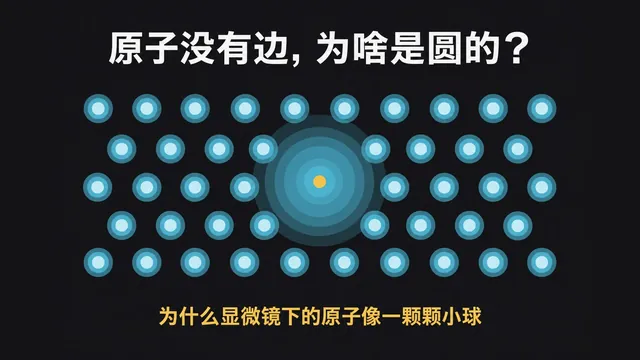
Atoms have no shell, just a fuzzy cloud. The microscope, like a thick glove, smooths it into round dots.
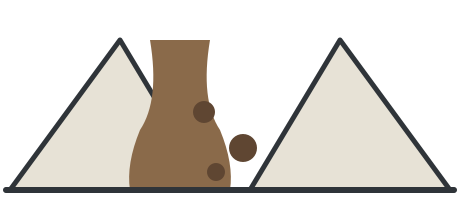
Not just "too much water": a whole gully of rock, mud and water that moves like wet concrete. What it is, the warning signs, and which way to run.
A place where you can go in but never come out, not even light. What it is, why nothing escapes, how we 'heard' two collide, and why Earth is safe.