
Can't play sound? The illustrated version is right below.
The full narration of the video.
Ever tried to tickle yourself? It doesn't work. Your brain saw it coming: that's your own hand. Your brain tags every single sensation. Did I make this, or did it come from outside? There's an illness that scrambles these tags. It's called schizophrenia. Worldwide, about one in every three hundred people has it.
In one study, some patients who heard voices could tickle themselves. Their brains didn't recognize their own hand. When we talk silently in our heads, the brain normally knows: that's me thinking. One leading explanation is this: the 'that's me' tag falls off. Your own inner words sound like someone talking in your ear.
In studies, sixty to ninety percent of patients have heard voices like this. To them, it's exactly like really hearing someone. The second thing that gets scrambled is the brain's 'this matters' switch. Normally, your brain picks out only what matters. A red car drives by, and you don't think twice.
When the switch is too sensitive, that red car seems to be there just for you. As if someone were sending you a secret signal. One ordinary thing after another starts to feel meaningful. So the brain builds a story to tie them together: someone is watching me. A belief that won't budge, no matter what anyone says, is called a delusion.
Not every patient hears voices. Some talk less and lose interest in everything. For some, thoughts get tangled up. So arguing 'that's not real' doesn't help. What they see and hear feels as real as what you see and hear. There's also a common mix-up: schizophrenia doesn't mean several people living in one body. That's a different condition.
And most patients aren't dangerous. In fact, they're more likely to be hurt by others. It usually starts in the late teens or twenties. It can be treated: medicine, talking, and a step-by-step return to everyday life. The World Health Organization says at least one in three can fully recover.
If someone near you talks about voices only they can hear, don't rush to argue. Just say: 'That sounds frightening. I'm here with you.' Then go with them to see a doctor.
Your brain tags every sensation:
"I made this" or "it came from outside."
Schizophrenia scrambles those tags —
and the switch that says "this matters."
So your own inner words can sound like someone else talking, and an ordinary car on the street can seem to be there just for you.
Put simply: losing track of "me" versus "not me" is one key to understanding this illness.
To them, these voices and feelings are exactly as real as anything else. They aren't faking it, and it isn't just imagination.
Not every patient has all of these. It looks different for each person.
Worldwide, about
1 in 300 people has it.
It usually starts in the late teens or twenties. Medicine, talking therapy, and a step-by-step return to school and work. The World Health Organization says at least one in three can fully recover. Sadly, many people never get specialist care.
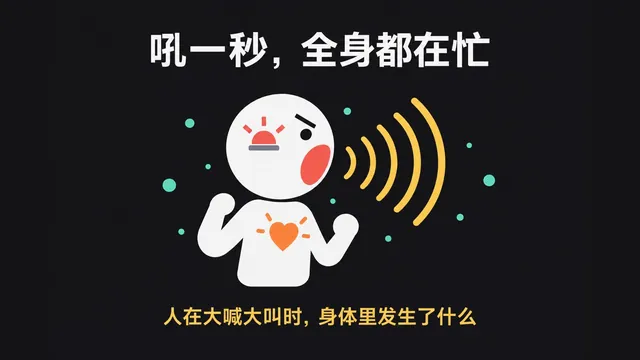
One second of shouting puts your whole body to work: a brain alarm, a rush of adrenaline, slamming vocal cords, even extra strength.

The fun of drinking is real, but it's a loan. Is a little good for you, what a red face means, why quitting is hard, and how to stop safely.

Nicotine hooks you; the smoke harms you. Why a cigarette feels relaxing, whether one a day is OK, what quitting does, and why it's hard.

It isn't your brain breaking: the thought sits on a tiny mental sticky-note board that gets crowded in conversation, and a new topic turns the page. Plus three small tricks.