
Can't play sound? The illustrated version is right below.
The full narration of the video.
A plate of sushi rides the belt for about 350 metres. If nobody has taken it by then, it is quietly removed. How does it know how far it has gone? That story starts with Sushiro. Sushiro is a Japanese conveyor-belt sushi chain. By sales, it is the biggest one in Japan.
Conveyor-belt sushi was invented in Osaka in 1958. Its inventor saw bottles riding a belt in a brewery, and thought: why not sushi? Sushiro came later. In 1984, a sushi chef opened the first shop in Osaka. It was first called Sushi Taro. The secret is under the plate. Each plate has a tiny chip stuck underneath.
Readers along the belt read each plate every time it passes. A computer works it out: how long ago the sushi was made, and how far it has travelled. Too far, and it comes off the belt. That data has another big use. The system remembers which sushi sells and when the crowds come.
So the kitchen knows ahead of time what to make next, and how much. Make the right amount, and less gets thrown away. According to reports, fewer than one plate in a hundred is now thrown away. Throwing less away means wasting less money. That's one reason conveyor-belt sushi can stay cheap.
Today Sushiro has more than 600 shops in Japan. There are over 300 more abroad, more than 100 of them in mainland China. Next time you take a plate off the belt, think about this: that plate has been quietly counting the distance all along.
Every Sushiro plate has a tiny chip underneath.
It tracks how far the sushi has travelled and how long ago it was made.
Too far, and it comes off; the data also tells the kitchen what to make.

The rooms and beds can be nearly the same. The extra star mostly buys people: staff who are always there and think ahead for you.

Jim Rohn's 1981 ten-minute talk: your income can't outgrow you, plus three things you can start on today.

The marshmallow test was overturned: kids who eat it aren't weak-willed, they just don't trust promises. How two worlds grow apart, and what changes things.
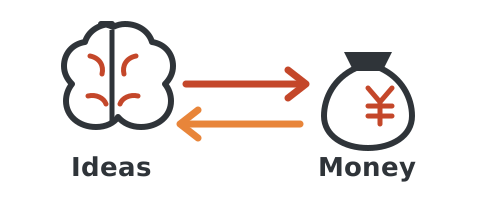
Does your thinking decide your wallet, or your wallet decide your thinking? Neither: it is a loop, and loops can be pushed.