Weak currency
vs inflation:
what’s the difference?
Can't play sound? The illustrated version is right below.
Read the transcript
The full narration of the video.
The yen sank back to where it was in 1990, yet prices in Japan barely moved. A weak currency and inflation sound like the same thing. They're not. Think of a country's money as the tokens of one arcade.
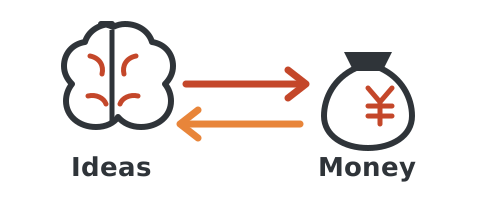
Inflation happens inside your own arcade. One go at the claw machine used to cost two tokens. Now it takes three. A weak currency happens at the door. You swap your tokens for the arcade next door's. It used to be one for one; now one gets you half. One is the price tag inside, the other the exchange board at the door. The two can move on their own.
In 2022, prices in America rose 9.1 percent in a year, the fastest in forty years. Yet that same year, the dollar was the strongest it had been in twenty years. America had pushed interest rates way up. Money from all over the world rushed to swap into dollars.
The tag inside went up, and so did the board at the door. Worth less at home, worth more abroad. Japan was the mirror image. In 2024, one dollar bought a hundred and sixty yen. The board at the door dropped a long way, but prices inside rose only two or three percent that year.
Still, a falling board slowly reaches inside. Japan buys most of its oil from abroad. When swapping costs more, so does filling up. And if an arcade's prices keep climbing for too long, nobody wants its tokens. So the two often show up together, but they are not the same thing. That board at the door has a real name: the exchange rate. Price tags rising across the shop: that's inflation.
Real exchange rates aren't set by an owner; people around the world trade them every day. The forex rates in your bank app are exactly that. For prices, look at a number called the CPI, published every month by the national statistics bureau. Some people loved the weak yen. In 2024, Japan welcomed 36.87 million foreign visitors, a record.
For them, a falling board turned all of Japan into a sale. Your pick: money that's worth less abroad, or money that buys less at home. Which scares you more?
The yen fell.
Japanese prices barely moved.
One is the board at the door.
The other is the tag inside.
In 2024, one dollar bought 160 yen, back to where the yen was in 1990. Yet prices in Japan rose only 2 to 3 percent that year. A weak currency and inflation are two different things.
Think of a country’s
money as arcade tokens
The two can move on their own.
America and Japan,
mirror images
Each one
can tug the other
So they often show up together, but they are not the same thing.
Their real names,
and where to see them
What the same phone costs in different countries also depends on exchange rates: iPhone prices around the world.
A weak yen,
happy tourists
In 2024, Japan welcomed 36.87 million foreign visitors, a record. For them, a falling board turned all of Japan into a sale.
Quick check
The yen buys fewer and fewer dollars. What does that tell you most directly?
The board at the door is the exchange rate; the tag inside is prices. The board can drop while the tag barely moves.