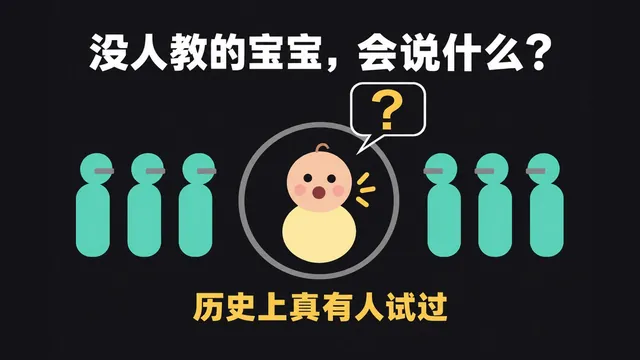
Why do sleepy babies fight sleep so hard?
Can't play sound? The illustrated version is right below.
Read the transcript
The full narration of the video.
The baby rubs his eyes and yawns, again and again. But the moment you lay him down, he bursts into tears and twists and fights with everything he has. He's clearly exhausted. So why won't he sleep? A lot of people think: he's not tired yet, let him play a bit longer. It's the other way around. He's past tired.
And you're not the only one up at night. One survey asked nearly thirty thousand families in seventeen countries and regions. In China, more than seven in ten parents said their child had a sleep problem. Behind it are at least three reasons. Number one: the body's clock isn't built yet.
When it gets dark, an adult's body releases something that makes you sleepy. In the morning, it releases something else that wakes you up. In a newborn, those two don't follow day and night yet. So he sleeps by day, wakes at night, and gets it all backwards. A British study followed thirty-five babies for months. Around eight weeks, the wake-up signal started to follow day and night. About a week later, the sleepy signal caught up.
Number two: a baby gets sleepy very fast. Think of sleepiness as a bucket. While you're awake, water trickles in, and when it's full, you want to sleep. An adult's bucket is big. It lasts a good sixteen hours. A baby a few weeks old has a much smaller one. It fills up in about an hour.
Miss that moment, and the bucket spills over. The body braces itself and pushes on, and the more tired he gets, the more he fusses. Almost every parent has seen this. But scientists still haven't fully worked out what's going on inside. Number three: falling asleep means you disappear.
From about six months on, a baby starts to understand: when you leave the room, you haven't vanished, you're just somewhere else. But he doesn't understand time yet. He doesn't know how long you'll be gone, or whether you'll come back. Closing his eyes means letting go of you. So here's the answer: he does want to sleep. He's desperately tired, but he hasn't learned to fall asleep on his own.
Adults slip from awake to asleep without thinking. A baby is still learning. Like learning to walk, it takes a lot of practice. He only knows one way to ask: crying. He's not fighting you. He's saying: I'm sleepy, help me. Next time, try this: watch for the first eye rub, the blank stare, the first yawn. Lay him down right then, drowsy but still awake. Don't wait for the crying.
Try it for three days, then come back and tell us: how many minutes faster did he fall asleep?
Not “not tired.”
Too tired.
Eye rubbing, yawning — then the moment you lay them down, they wail and twist with all their might. Many people say: “They’re not tired yet. Let them play a bit longer.”
It’s actually the opposite:
they’re overtired.
You’re not alone. One survey asked nearly 30,000 families in 17 countries and regions: in China, over 70% of parents felt their child had a sleep problem (in Thailand, just over 10%).
The body clock
isn’t set up yet
When it gets dark, an adult’s body releases something that makes you sleepy (melatonin). In the morning it releases something else to wake you up. These two follow day and night — that’s your body clock.
In a newborn, these two don’t know day from night yet. So they sleep all day and wake at midnight — days and nights flipped.
A UK study followed 35 babies: around 8 weeks, “wake up” locks onto the clock; a week later, “sleepy” follows.
Every baby is different; babies born early tend to get there later.
Sleepiness is a bucket.
A baby’s is tiny.
While you’re awake, sleepiness trickles into a bucket like water; when it’s full, you want to sleep. An adult’s bucket is big enough for over 12 hours (it’s the same bucket behind adult drowsiness). A newborn’s is much smaller: it fills up after about an hour awake.
Miss that moment and it overflows: the body pushes through instead — the more tired, the fussier.
Almost every parent has seen this “second wind.” It’s often blamed on a stress hormone, but in babies, scientists haven’t fully worked it out.
Falling asleep means
you disappear
From around 6 months, babies start to get it: when you leave the room, you haven’t vanished — you’re just somewhere else.
But they don’t understand time yet: how long until you’re back, or whether you’ll come back at all. Closing their eyes means letting go of you. This fear of being apart is common from 6 months to 3 years. It’s a normal step in growing up, and most kids grow out of it.
For tens of thousands of years, babies grew up right next to adults.
The crying means
“help me”
Sliding from awake into dreams is something adults mastered long ago. Babies are still learning — like learning to walk, it takes lots of practice.
They’re not refusing sleep. They’re exhausted, but can’t yet fall asleep on their own.
The only tool they have is crying. They’re not fighting you.
First eye rub?
Lay them down.
The American Academy of Pediatrics suggests putting babies down drowsy but still awake (on their back), so they slowly learn to fall asleep on their own. Don’t wait for the crying.
still learning how
Quick check
A baby rubs their eyes, then cries and struggles when laid down. What's most likely going on?
Their tiny bucket has overflowed: they're exhausted but haven't learned to drift off yet, so crying means “help me.”