What “Life Is
Only One Thing”
Says
Can't play sound? The illustrated version is right below.
Read the transcript
The full narration of the video.
Same downpour, same traffic jam. One driver pounds the wheel and curses the whole way. Another turns on the radio and gets home in a good mood. What's the difference? There's a book called "Life Is Only One Thing," and the answer is hidden in its title. The author is Jin Weichun. In 1987, in Taiwan, he founded a business magazine: Business Weekly, which became one of the best known there.
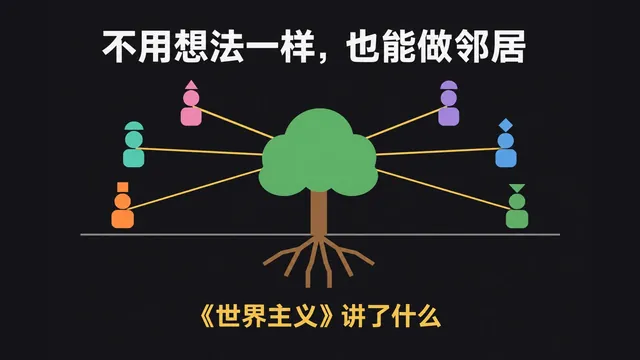
But by his own account, the more his career took off, the emptier he felt inside. So he started on a subject no school teaches: how to live. The handiest idea in the book works like three baskets. Everything in the world is one of three kinds: Heaven's business, other people's business, and your own. Rain, traffic, getting old, getting sick: that's Heaven's business, and nobody controls it. The book says: don't overthink it, don't wrestle with it.
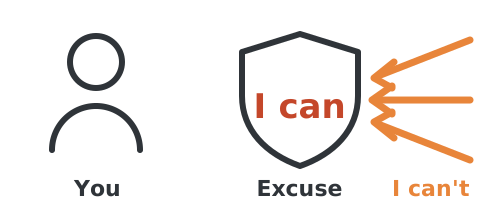
Whether your family keeps things tidy, whether your kid listens, what your coworkers think of you: that's other people's business. The book says: don't meddle, and don't take it to heart. The smallest basket holds your own business: what you think, what you say, how you respond. This is the only basket you hold the key to. Back to that jammed road. The rain is Heaven's, the car in front is someone else's. Cursing or singing along the whole way is yours.
What we usually do is the reverse: we pour our energy into the first two baskets and neglect our own. The book says we've mixed up taking things to heart with taking them seriously. So what goes in your own basket? He lists small things: really listen, think before you speak. Give a sincere compliment, remember people's names, don't keep score. He says loving yourself isn't spoiling yourself: it's the skill of cheering yourself up at any moment.
When something can't be changed, he says to yield. That isn't giving up. It means first admitting: this is how things are, and then asking what I can do. He has an image for it: be a flower in full bloom, and the butterflies come on their own. Good friendships aren't begged for; they're drawn in. So what's the one thing in the title? Living yourself well. Put down the other two baskets, and that's the only thing left to worry about.
To be fair: this is one man's lessons from decades of living, not a finding from experiments. He isn't the first to sort things into these three: the American writer Byron Katie said much the same. On Douban, a Chinese book-review site, it scores 7.5 out of 10: some find it life-changing, others find it preachy. Next time something weighs on you, ask first: which basket is this in? And the thing bugging you most today, which basket does it belong to?
Same rain,
two drivers
Stuck on the same road, one driver pounds the wheel and curses all the way. The other turns on the radio and gets home in a good mood.
What’s the difference?
The answer is in a book’s title.
A hit magazine,
an empty heart
The author is Jin Weichun. A former newspaper columnist, in 1987 he founded Business Weekly in Taiwan, which became one of the best-known magazines there.
But by his own account, the more his career grew, the emptier he felt. So he set out to learn a subject no school teaches: how to live. The book is what he learned over more than ten years.
The simplified-Chinese edition (人生只有一件事) came out in 2021 from CITIC Press.
Everything fits
in three baskets
Back on
that jammed road
Your basket holds
small things
And one more: don’t keep score.
Loving yourself isn’t spoiling yourself. It’s the skill of cheering yourself up anytime.
When something can’t be changed, he says to “yield”: not giving up, but first admitting this is how things are, then asking what you can do.
His image: be a flower in full bloom, and the butterflies come on their own. Good friendships aren’t begged for; they’re drawn in.
To be fair
not a lab finding He isn’t the first to sort things this way: American author Byron Katie speaks of “three kinds of business: mine, yours and God’s.” On Douban, a Chinese book-review site, it scores 7.5/10; some find it life-changing, others preachy.
live yourself well.
Quick check
Fuming in a traffic jam: by the book's three baskets, what should you deal with first?
The rain is Heaven's, the car in front is someone else's; only your own response is the basket you hold the key to.