
Can't play sound? The illustrated version is right below.
The full narration of the video.
Most people think water has to hit 100 degrees to turn into vapor. But shower water is only about 40, and the bathroom still fills with white mist. In fact, water doesn't need to reach 100 degrees to become vapor at all. Water is made of countless tiny bits packed together. They never stop moving—some slowly, some really fast.
At the surface, the fastest few give a push, break free of their neighbors, and fly into the air. Those escaped bits are water vapor. The hotter the water, the more fast ones there are, and the more fly off. So what's special about 100? At 100, big bubbles of vapor form inside the water too, and the whole pot turns to vapor. That's boiling.
Below 100, vapor can only slip away from the surface, one bit at a time. That's what your shower water is doing. But water vapor is invisible. That white mist you see isn't vapor at all. Air holds vapor the way a cup holds water. Warm air is a big cup, and cool air is a small one.
A cubic meter of air at 40 degrees can hold 51 grams of vapor. At 20 degrees, only 17. The hot air by the water is packed with vapor. When it drifts somewhere cooler, the cup shrinks, and it can't hold it all. The extra vapor huddles back into tiny droplets of water. Countless droplets floating together—that's the white mist you see.
Same with the mirror. It's cooler than the air, so when vapor touches it, it turns back into droplets, and the mirror fogs up. That's why a chilly winter bathroom gets so steamy, and a warm summer one barely does. So next time your shower fogs up, you'll know: the water has been quietly turning into vapor all along. It's the cool air that makes it show.
Water doesn’t need to boil to turn into vapor—it does it quietly all the time. Warm air fills up with vapor; when it meets cooler air, it can’t hold it all, and the extra turns into tiny droplets. Those droplets are the mist you see.
The “cup” is just a comparison: air isn’t really a container—the warmer it is, the more vapor can mix in.
The most water vapor one cubic meter of air (a block one meter on each side) can hold:
Cool from 40°C to 20°C, and over 30 grams of vapor has nowhere to go—so it turns back into droplets.
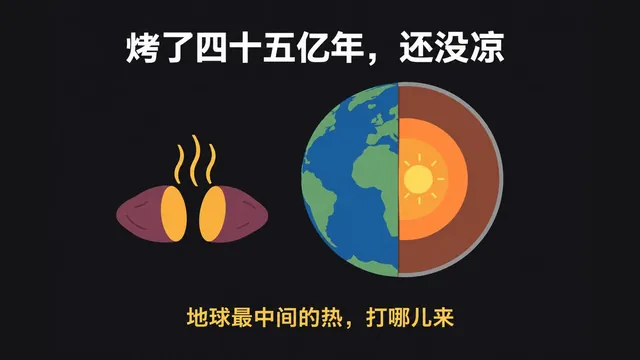
Earth's core is about as hot as the Sun's surface. Most of that heat was stored up when the planet was born, and it still hasn't cooled after 4.5 billion years.

To your eye, most nebulas are a faint gray smudge. The light and shapes in photos are real; some colors are true, some are translated.

In September an AI claimed to crack this million-dollar puzzle about flowing water. It isn't official yet, and it only covers the half where the water is pushed.

It's really the top speed of news: anything faster would let effects arrive before their causes.