
Can't play sound? The illustrated version is right below.
The full narration of the video.
In space photos, nebulas glow red, teal and gold, like clouds of colored smoke. But put your eye to a telescope, and you'll most likely see a faint gray smudge. So are the colors in the photos fake? Not exactly. The answer comes in three layers. Start with your eyes. They have two kinds of tiny light-catching cells.
One kind sees color, but only gets to work when the light is bright enough. The other kind is super sensitive and works even in very dim light, but it only sees light and dark, not color. That's why, with the lights off at night, you can make out the shapes in your room, but can't tell what color anything is. A nebula's light is very dim. When it reaches your eye, only the color-blind cells are awake. So it looks gray.
A camera is different. It can keep its door open and collect light for hours. Light is like raindrops, collected in a bucket drop by drop. Once enough has piled up, the colors show. That's layer one: in many photos, the colors are light the gas really gives off. Hydrogen glows red, oxygen glows teal. It's just too faint for your eyes to catch.
With the brightest ones, like the Orion Nebula, experienced stargazers using big telescopes can spot a hint of green and pink. Layer two: in many photos, the colors have been translated. Space telescopes actually take black-and-white pictures. Each shot lets in just one kind of light.
Then people give each black-and-white picture a color, and stack them up into one color image. One famous recipe: sulfur's light becomes red, hydrogen's becomes green, and oxygen's becomes blue. Hydrogen really glows red, but here it turns green. Why swap? Hydrogen and sulfur both glow red, so they'd blur together. Give them different colors, and you can tell the gases apart at a glance.
Layer three: some telescopes see light your eyes can't see at all. The Webb telescope, for example, sees infrared. It's like a song too low to hear, sung again a few keys higher. The order of the notes stays the same, it's just moved to where you can see it: the longest light becomes red, the shortest becomes blue. So the light is real, and the shapes are real. As for the colors, some are true, and some are translated.
What if you flew right up to one? The closer you get, the bigger it looks, but its light spreads out just as much. It wouldn't look any brighter, still faint and pale. The photos aren't lying to you. They translate what you can't see into something you can. Next time you see a colorful space photo, ask: true color, or translated? Got a question you've always wondered about? Write it in the comments. It might be our next episode.
The light and the shapes in the photo are real. Some colors are true, some are “translated.” The light is just too faint for your eyes to catch.
That’s why, with the lights off at night, you can see the shapes in your room but not their colors. A nebula’s light is so dim that only the “dark cells” wake up, so it looks gray.
Why translate? Hydrogen and sulfur both glow red, so they’d blur together. Give them different colors and you can tell the gases apart at a glance.

In September an AI claimed to crack this million-dollar puzzle about flowing water. It isn't official yet, and it only covers the half where the water is pushed.

It's really the top speed of news: anything faster would let effects arrive before their causes.
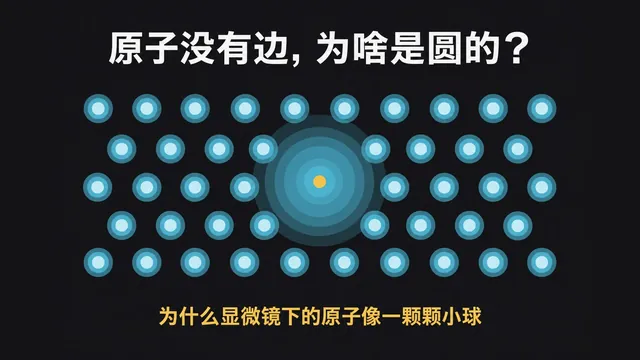
Atoms have no shell, just a fuzzy cloud. The microscope, like a thick glove, smooths it into round dots.

Not just "too much water": a whole gully of rock, mud and water that moves like wet concrete. What it is, the warning signs, and which way to run.