Why does a blast of air hit you when you walk into a store?
flattened at a shop door
Can't play sound? The illustrated version is right below.
Read the transcript
The full narration of the video.
The supermarket door is wide open. Why doesn't all the cold air escape? Walk in on a summer day, and a gust hits the top of your head, pressing your hair flat. That gust isn't there to welcome you. It's a door.
Let's follow a puff of hot air from outside and see where it goes. Inside, the air conditioning is on. Outside, it's over thirty degrees. Cold air is heavy, so it spills out through the bottom of the doorway. Hot air is light, so it slips in through the top.
Leave the door open, and the store's cool air just keeps pouring out. In winter it flips: warmth sneaks out the top, and cold air floods in at your feet. So why not just close the door?
People come and go all day, so the door never stays shut. And many shops believe an open door invites more people in. So above the door frame, there's a long box. Inside is a row of fans, pushing air hard downward through a narrow slot.
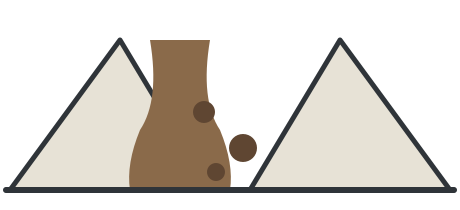
That airflow is like a waterfall pouring down across the doorway. You dash through, get splashed on the head, and you're in. But the puff of hot air trying to drift in sideways hits the waterfall and gets swept down.
When the air hits the floor, it splits in two: one stream pushes outward, one flows back inside. The outward stream shoves the hot air back. The inward stream keeps the cool air in the store. Still, it isn't a door that seals tight.
Set up well, it blocks roughly sixty to seventy percent of the air. With people walking through or wind outside, it blocks a bit less. This thing is called an air curtain. Next time, look up as you walk in: a long bar over the door, with a thin slot along the bottom.
The waterfall is that downward air. What gets swept away is the hot air from outside. Someone else wants in, too: a fly. It's so light that once it flies into the downward air, it gets blown toward the floor and turns back.
That's why China's food safety rules say: kitchen doors that open straight outside need a fly screen or an air curtain. It holds back some dust and car exhaust, too. In winter, some air curtains have heaters inside and blow warm air. That cozy feeling when you step in? That's it.
The same kind of curtain hangs at cold-storage doors too, except there it's holding in freezing cold. That warm blast at a store door in winter: do you stop and enjoy it, or hurry on through?
An open door leaks the cold out
Cold air is heavy, so it flows out through the bottom half of the door. Hot air is light, so it slips in through the top half. Leave the door wide open and the store’s cold air just keeps pouring out. In winter it flips: the heat escapes up top, and cold wind rushes in at your feet.
So why not shut it? People come and go all day, so it never stays shut. And many stores believe an open door invites more people in. Why tall buildings suck in cold wind in winter is in the revolving door episode.
A waterfall made of wind
A long box sits on top of the door frame. Inside is a row of fans that blast air hard downward through a thin slot underneath.
It’s like a waterfall
pouring down the doorway.
A waterfall’s water just runs away. The air does something else: when it hits the floor it splits in two. One stream pushes outward and shoves the hot air back. The other flows back into the store and keeps the cold in.
Blocks about two-thirds, not all
Installed well, it blocks roughly 60–70% of the air moving through. With people walking through or wind outside, it blocks a bit less. So it isn’t a sealed door. It’s a door that leaks less.
It’s called an air curtain (or air door). Next time you walk in, look up: a long bar on top of the door frame with a thin slot along the bottom. Many switch on when the door opens. The waterfall’s water is that downward air; what gets washed away is the hot air outside.
What else it keeps out
Cold storage rooms use it too
The same kind of air curtain hangs at cold-storage doors. There, what it keeps in is below-freezing cold. Many experiments on how well air curtains work were done at cold-room doors.
is an invisible door.
Quick check
What is that downward blast of air at a store entrance mainly for?
Like a waterfall across the doorway: hot air drifting in sideways hits it and is washed away, so less cold escapes.